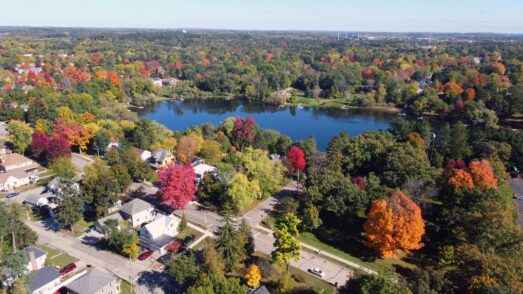
A group of interdisciplinary engineering students reviewed Waupaca’s current shoreland and wetland zoning ordinances, analyzed compliance and DNR and FEMA best practices, and identified possible areas of improvement. Their goal was to reduce the risk of flooding in Waupaca, protect water resources, and maintain program eligibility for sustainability status. […]
Read More… from Reviewing shoreland and wetland zoning to ensure compliance and promote best practices
As Waupaca’s population increases and its facilities continue to age, the city is interested in designing a public safety square that would include a combined facility for police and fire services. A group of engineering students created five site plans that included drive-through bays for firetrucks, space for full-time firefighters, an impound lot for the […]
Read More… from Envisioning a “Public Safety Square” in Waupaca
Walworth County worked with students to explore local interventions to address gainful employment access, which was identified as a key social determinant of health in recent community plans. Students explored several models for supporting community-coordinated services and resources, and developed a weighted decision matrix to help the county make evidence-based decisions. […]
Read More… from Addressing income and gainful employment as social determinants of health in Whitewater, Darie
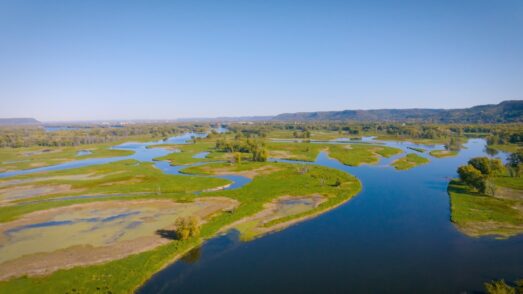
Measuring runoff from agricultural fields can inform conservation practices that prevent erosion, harm to the environment, and economic fallout. Engineering students built a runoff monitor prototype using a water sensor that measures the height of the liquid in which it is immersed. […]
Read More… from Developing a field runoff gauge prototype
To support flood mitigation efforts in Vernon County, a group of engineering students built a stream height measuring device prototype that is affordable and easy to replicate on a large scale. This tool can measure the height of a water source, transit data from a sensor into a microprocessor, and then output the data into […]
Read More… from Developing a more cost-effective stream gauge prototype
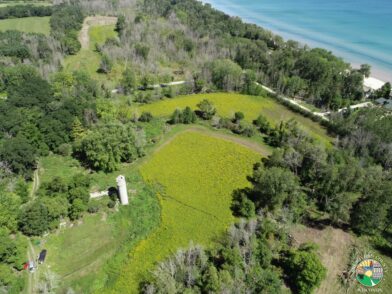
Sheboygan County is reimagining the Amsterdam Dunes Preservation Area and plans to add an observation deck attached to an existing silo, among other improvements. Engineering students designed three plans to adapt the silo as an observation deck. The plans include options for minimal structural modifications, structural reinforcement, and a self-supported ring observation deck. […]
Read More… from Designing public access trails for Amsterdam Dunes
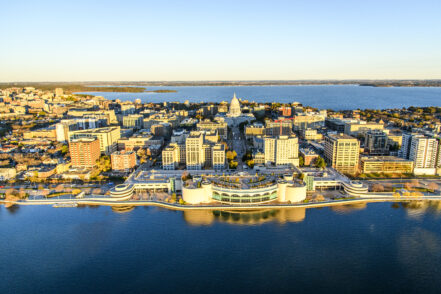
Industrial Systems Engineering students conducted a time study of several polling places during the City of Madison’s April election. By conducting a systems analysis, they identified pain points, root causes, and opportunities for cost-effective, proactive solutions to optimize election-day processes for streamlined operations and positive voter experiences. […]
Read More… from Collecting election data to assess election day operations and wait times
Industrial Systems Engineering students used a systems approach to identify opportunities for increased operational efficiencies and coordination between the 12 Emergency Medical Services (EMS) providers in Jefferson County. Students recommended interventions such as a roving paramedic position or shared secondary ambulances as cost-effective strategies to save costs while maintaining response times and expanding 24/7 paramedic-level […]
Read More… from Identifying countywide systems efficiencies and opportunities for cost savings