
Despite providing a wide variety of recycling education and outreach materials, the citywide recycling error rate remains fairly consistent, which has both environmental and financial consequences for the community. To better understand how residents currently access recycling information and how they would like to receive it in the future, the Madison Streets Division worked with […]
Read More… from Designing resident outreach strategies improve recycling understanding and reduce error rates
As the City of Madison’s Community Development Authority evolves and expands to meet the affordable housing needs of residents, the city wants to better understand the challenges and experiences of existing voucher holders and landlords. To support this, students developed potential resident satisfaction survey questions to support future outreach efforts. […]
Read More… from Identifying barriers to the voucher program
Industrial Systems Engineering students conducted a time study of several polling places during the City of Madison’s April election. By conducting a systems analysis, they identified pain points, root causes, and opportunities for cost-effective, proactive solutions to optimize election-day processes for streamlined operations and positive voter experiences. […]
Read More… from Collecting election data to assess election day operations and wait times
Madison Metro Transit experiences a significant level of turnover in its public transit operators, and was interested in exploring the feasibility and ideal design for a mentorship program that could support improved retention. A team of Strategic Human Resource Management developed a framework and materials that incorporate evidence-based best practices. […]
Read More… from Developing a new hire mentorship program for Madison Metro Transit
Students studying agriculture and applied economics analyzed 14 sites for their compatibility with community gardening, permaculture, or market farming with the goal of helping the City of Madison address food insecurity by exploring urban agriculture opportunities on underutilized city land. The students concluded that urban agriculture can be a viable strategy for addressing food insecurity […]
Read More… from Planning for urban agricultural uses on city-owned lots
A team of Master of Business Analytics students worked with Monona Terrace to analyze staffing and budget data over the last five years to identify trends and support data-driven decision-making on staffing. Students created a rolling budget forecast tool and recommended policy and staffing changes to help the organization more accurately forecast for staffing needs. […]
Read More… from Optimizing the Monona Terrace Audio Video (AV) Department staffing and budgeting for hourly stagehands
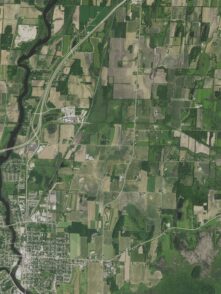
Industrial Systems Engineering students used a systems approach to identify opportunities for increased operational efficiencies and coordination between the 12 Emergency Medical Services (EMS) providers in Jefferson County. Students recommended interventions such as a roving paramedic position or shared secondary ambulances as cost-effective strategies to save costs while maintaining response times and expanding 24/7 paramedic-level […]
Read More… from Identifying countywide systems efficiencies and opportunities for cost savings