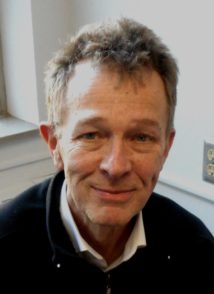
Joel Rogers, EPIC-N Co-Chair and CEO
Director – High Road Strategy Center- Faculty – University of Wisconsin-Madison
Joel Rogers is the Noam Chomsky Professor of Law, Public Affairs, and Sociology at the University of Wisconsin-Madison, where he also directs the Havens Wright Center for Social Justice and the High Road Strategy Center, a think-and-do tank on high-road development that also operates the Mayors Innovation Project, State Smart Transportation Initiative (with Smart Growth America), Government Performance Action & Learning (GPAL), and ProGov21. Rogers has written widely on party politics, democratic theory, and cities and urban regions. Along with many scholarly and popular articles, his books include The Hidden Election, On Democracy, Right Turn, Metro Futures, Associations and Democracy, Works Councils, Working Capital, What Workers Want, Cites at Work, and American Society: How It Really Works. Joel is an active citizen as well as academic. He has worked with and advised many politicians and social movement leaders, and has initiated or helped lead several progressive NGOs (including the New Party (now the Working Families Party), EARN (Economic Analysis and Research Network), WRTP (Wisconsin Regional Training Partnership), Apollo Alliance (now part of the Blue Green Alliance), Emerald Cities Collaborative, State Innovation Exchange, and EPIC-N (Educational Partnership for Innovation in Communities Network). He is a contributing editor of The Nation and Boston Review, a MacArthur Foundation Fellow, and identified by Newsweek as one of the 100 living Americans most likely to shape U.S. politics and culture in the 21st century.
Rajul Pandya, EPIC-N Co-Chair
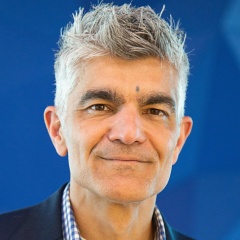
Executive Director and Professor of Practice- Mary Lou Fulton College for Teaching and Learning Innovation- Arizona State University
Pandya joined Arizona State University as the Fulton Presidential Professor of Practice in Mary Lou Fulton Teachers College and Executive Director of the Global Futures Education Lab in 2024. Before that he served as the Vice-President of Community Science and founding Director of the Thriving Earth Exchange at the American Geophysical Union.
Educated as a physicist and atmospheric scientist, Pandya brings a history of working at the intersection of science, education and community partnerships to advance understanding of the scientific and social dimensions of sustainability. His work has focused on how the sciences can be more participatory, how community participation contributes to scientific innovation and societal relevance, and science as a community and human right.
Raj invites everyone—especially people from communities who have been historically excluded —to help build sustainable futures where people and nature thrive together.

Courtney Griesel, Treasurer
Oregon Community Relations Manager – Sierra Pacific Industries
Courtney Griesel is a community & economic development and relations professional with extensive experience in public and private sector service. She holds a Master of Organizational Leadership degree from Gonzaga University and Bachelor of Science in Planning, Public Policy & Management from the University of Oregon. Her expertise areas include community engagement, legislative engagement, economic development, and regulatory, land use, and community policy development. Courtney began her career in public sector service, with over 15 years focused on facilitating innovative economic development programs and projects, capacity building and public-private partnerships focused on resiliency.
Andrea Fox
Director of State League Services- National League of Cities (NLC)
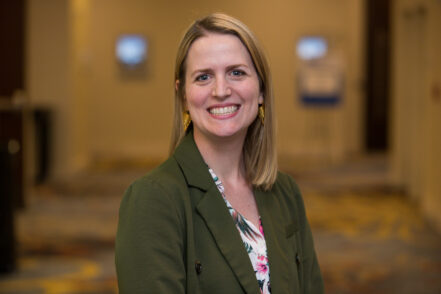
Andrea has two decades of experience working to improve communities. Her leadership spans direct local government service—most recently as a Town Manager in Maryland—and a national scope through her current role as Director of State League Services at the National League of Cities (NLC). At NLC, she works in close coordination with the 49 state municipal associations to scale best practices nationwide and in support of our nation’s 19,000 cities, towns, and villages. Andrea’s previous key roles include positions at ICMA, in the govtech sector, and in municipal leadership as a Sustainability Coordinator and Assistant to the Mayor. Andrea holds a Master of Public Policy, is an AICP Certified Planner, and is a graduate of the University of Maryland’s Academy for Excellence in Local Governance.
Andrew Gilbert Were
Lecturer and Urban Planner- Department of Urban and Regional Planning- Makerere University

Andrew Gilbert Were, is a Lecturer and Urban Planner from the Department of Urban and
Regional Planning, Makerere University – Uganda. He holds a PhD in Urban Planning and
Design. He specializes in how streets and public spaces are valorized and optimized to create working spaces for vulnerable groups in the city micro-economy. His main tutorials and publications have focused on urban informality, slum upgrading, urban governance and
management, resilience & risk reduction, post disaster and resettlement planning, with a focus on how urban managers can improve living conditions of vulnerable groups. He coordinates partnerships between local governments, communities and universities under the EPIC-N framework. Andrew is a member of the Committee that oversees Physical Planning Matters at Uganda’s National Planning Authority. He is also a member of Kampala Metropolitan Development Forum (KMDF). He has consulted with the World Bank and UN-Habitat on selected Government co-funded development projects that involved refugees, internally displaced persons and slum upgrading in Uganda.
Beatriz Rahmer Pavez
Deputy Director of the Office for Social and Public Innovation- Universidad de Chile
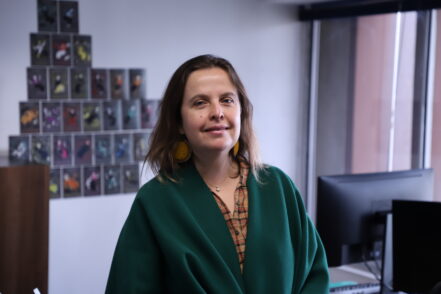
Beatriz Rahmer Pavez is a Social Worker, holds a Master’s degree in Gender Studies from Universidad de Chile, and is a PhD candidate in Higher Education at Universidad de Palermo, Argentina. She has worked in universities, the Ministry of Education of the Government of Chile, NGOs, and consultancies, focusing on the science–policy interface, public innovation, and inclusion in higher education. She contributed to the creation and strengthening of the PACE Program, a national public policy aimed at promoting inclusive access to higher education, developed with the support of UNESCO. Her current research focuses on the mechanisms through which academia engages with and influences public policymaking. She is the Deputy Director of the Office for Social and Public Innovation at Universidad de Chile and a member of the Núcleo de Estudios Sistémicos Transdisciplinarios (NEST) and the Núcleo de Investigación en Interdisciplina y Transdisciplina para la Educación Superior (NITES).

Branden Born
Co-Director – Livable City Year – Faculty – University of Washington
Branden is Associate Professor of Urban Design and Planning and Co-Director of the Livable City Year program at the University of Washington. He received his master’s and doctoral degrees in Urban and Regional Planning from the University of Wisconsin. Branden studies planning process and regional governance using the food system as a lens for analysis. His interests include questions of democracy in societal decision-making and the role of the state and planning in a neoliberal context.
Che Zalina
Head- Centre of Embedded Edu-Green Technology – Faculty – Universiti Pendidikan Sultan Idris

Professor Dr. Che Zalina Zulkifli is a distinguished professor and globally recognized leader in smart sustainable systems, green technology innovation, and digital transformation in higher education. She currently serves as the Head of the Centre of Embedded Edu-Green Technology at Universiti Pendidikan Sultan Idris (UPSI), Malaysia. Over the past two decades, Prof. Zalina has spearheaded IoT, AI, and embedded system solutions in environmental management, smart farming, education, waste management, and bioacoustics wildlife monitoring. Her leadership has attracted multi-million-ringgit grants, forged impactful industry–government partnerships, and expanded international collaborations across Malaysia, ASEAN, and Central Asia.
With this background, she is deeply passionate about advancing university–community partnerships to accelerate sustainable solutions. Prof. Zalina envisions bringing a strong regional voice to the Educational Partnerships for Innovation in Communities-Network (EPIC-N), contributing her extensive expertise in cross-border collaboration, green technology deployment, and policy–practice integration.
Colleen Rose
Director of Student Engagement- Sustaining Hoosier Communities- Indiana University Bloomington
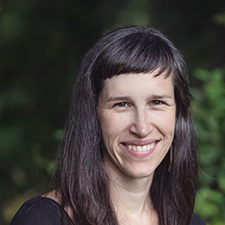
Colleen Rose leads student-based initiatives at the Center for Rural Engagement, including the Sustaining Hoosier Communities (SHC) Program. Colleen has close to 20 years of leadership experience in higher education with Indiana University. Her background includes expertise in community-engaged pedagogy, student co-curricular involvement and service, and student services including academic advising, recruitment, and admissions. Colleen also completed a term of national service in AmeriCorps*VISTA.
Colleen is a Licensed Social Worker in the State of Indiana and holds a Master of Social Work and B.S. in human development/family studies from Indiana University. She was born and raised in southern Indiana and is proud to be a 7th generation Hoosier.
Connie Frey-Spurlock
Director- SIU System Office of Community Engagement

Dr. Connie Frey Spurlock is a sociologist committed to dismantling hierarchies of oppression and building in their place flourishing relationships. She does this work by centering community-identified goals with meaningful learning experiences for students. Frey Spurlock is director for the SIU System Office of Community Engagement (OCE) and founding director of the SIUE Successful Communities Collaborative, a cross-disciplinary program based on the EPIC model that works to advance the needs of communities while training the next generation workforce and leadership. Frey Spurlock has forged several meaningful relationships with government and nonprofit stakeholders. Her dedication to community engagement is reflected in an extensive portfolio of grant-funded projects. Since 2017, Frey Spurlock has been principal or co-investigator on almost $9M in external funding for transdisciplinary projects such as “Broadband Regional Engagement for Adoption and Digital Equity,” “Integrating Hydrology and Social Science for Community Resiliency against Flooding Hazards,” and the “Partners for Re-entry Opportunities in Workforce Development,” grants.
Ilona Ballreich
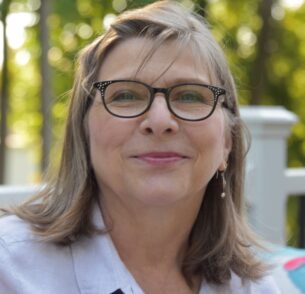
Program Manager- Sustainable Communities Collaborative
Ilona Ballreich is the program manager of the Sustainable Communities Collaborative (SCC), a program of the Sustainability Institute at Penn State. Ilona works closely with faculty, students, and community partners to ensure meaningful, experiential student projects focused on the sustainability needs of the community. The SCC facilitates over 50 projects annually in primarily rural and small urban communities.
Ilona brings two decades of experience in community development to her position, including as executive director of a non-profit arts organization. She developed festivals and venues, authored newsletters, and conceived and edited a book about central Pennsylvania. She is trained in community development strategies and active in numerous community organizations. She holds a degree in industrial technology and architecture and is currently enrolled in the Community and Economic Development Masters of Professional Studies degree program at Penn State.
Jeewasmi Thapa
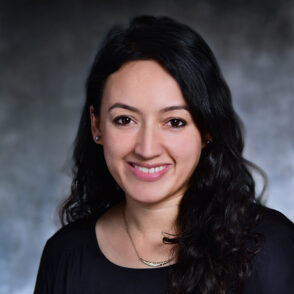
Senior Program Coordinator- Texas Target Communities- Texas A&M University
Jeewasmi Thapa is the Senior Program Coordinator of Texas Target Communities, a service-learning and engaged research program at Texas A&M University (TAMU). She leads partnerships with communities to provide context-specific planning support that addresses land use, civic, environmental, and economic challenges. As a certified planner, she designs planning processes and mentors graduate students in community engagement, planning tools, and policy evaluation to develop place-based strategies and long-range plans. She also serves as an Engagement Specialist with the Hazard Reduction and Recovery Center at TAMU. Previously, she worked as an architect in Kathmandu, Nepal.

Marc Schlossberg
Co-Director – Sustainable Cities Institute – University of Oregon
Marc Schlossberg is a Professor of City and Regional Planning and co-director of the Sustainable Cities Initiative (SCI) at the University of Oregon where he has worked since 2001. His teaching, research, and community engagement focus on active transportation, livable community design, and applying knowledge to policy and practice. A fun fact is that Marc has four times taught a study abroad course on designing cities for people on bikes; students accompanied him to Denmark and the Netherlands to learn first-hand from the best cycling cities in the world. Marc is a two-time Distinguished Fulbright Scholar who served in the United Kingdom from 2009-10 and in Israel from 2015-16. Prior to his academic career, Marc worked in the nonprofit sector and was a US Peace Corps volunteer in Fiji.
Maria Dahmus
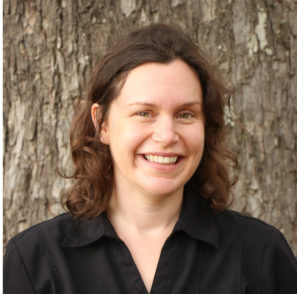
Maria Dahmus, Ph.D. is the co-founder and director of the Sustainable Communities Partnership (SCP) in the Office of Sustainability Initiatives at the University of St. Thomas in St. Paul, Minnesota. Maria develops and implements the strategic vision for SCP, from multi-year partnerships and project development to daily operations. In 2017, Maria created SCP Arts. Through SCP Arts, students collaborate with local artists to translate SCP project findings into artwork, bringing to life partners’ sustainability goals for people of all ages. Maria received her Ph.D. in Environment and Resources at the University of Wisconsin. She studies social dimensions of sustainability, including the development of common ground and coalitions for natural resource policy among ‘unlikely partners’ and social dimensions of nutrient fluxes in the urban ecosystem. She has also worked as an experiential educator and has taught a variety of environmental studies courses, partnering on applied projects with cities and other partners, including visual and performing artists.