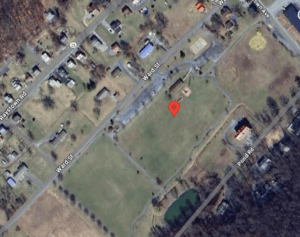
This project focuses to provide Walker Township leadership information and tools for its residents to address backyard flooding relating to maintenance and increased absorption on private land. When residential housing is adjacent to a creek, the lawns often run up to the creek bed. In Walker Township several residential lots border a creek that is […]
Read More… from Riparian Planting Guides to Address Flooding in Walker Township
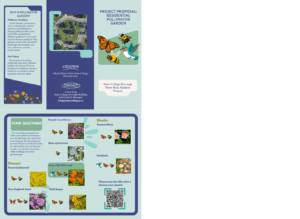
The town of State College is in the process of providing its residence with detailed guidance on promoting pollinators through pollinator gardening approaches and habitat. Students are asked to provide recommendations specific to the State College geography for the establishment of pollinator habitat/gardens in State College residential neighborhoods, including native plants materials, guidance on planting and […]
Read More… from Residential Pollinator Garden Guide for State College Borough
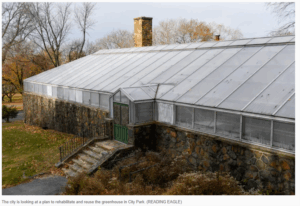
The City of Reading owns a large greenhouse, 6,500sqft in City Park that has been vacant since 2018. The City is interested in using the Greenhouse to educate the public about growing plants and sustainable food systems, promote the local farmers market and local food initiatives, serve for training and workforce development purposes, and to […]
Read More… from Revitalizing the City of Reading Greenhouse as a Community Space
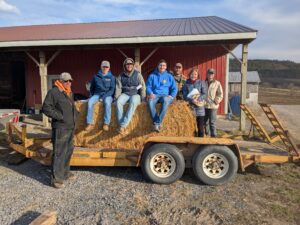
The USDA office in Huntingdon County is interested in promoting regenerative farming practices. While there has been some interest among the farming community, more could be done. The USDA office would like to provide leadership by working with local farmers to explore regenerative practices and possibly establish demonstration sites. Students had the opportunity to visit […]
Read More… from Regenerative Grazing Initiative in Huntingdon County
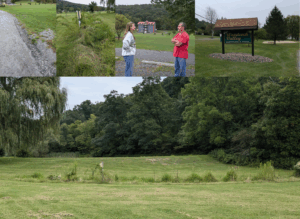
Walker Township in Huntingdon County, Pennsylvania, is the owner and caretaker of Woodcock Valley Park, which serves the community of McConnellstown and surrounding residents as an outdoor recreation space. The township supervisors and Park Committee would like to see changes to the park that implement easier maintenance and more utility for local residents. The township […]
Read More… from Improving Community Park Design: A study in Walker Township
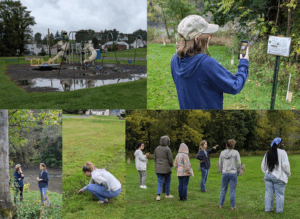
Coburn Park serves as the community park for Penn Township, consisting of a 15+ acres area along Penns Creek, with two picnic pavilions, a playground, baseball field and large open, mowed areas. Opposite the parking area for the park, is a swale that seems to collect stormwater runoff from the town of Coburn slightly uphill. […]
Read More… from Rain Garden Initiative in Coburn Park
Numerous pathways connect Columbia’s community-centered suburban villages. These well-traveled paths are perfect for dog walkers, runners, and any citizen desiring a connection to nature that is close to home. Columbia’s paths follow stream corridors, guarded by vegetation, which tends to struggle against the influence of invasive plant species. Creating a means to manage the presence […]
Read More… from Urban Forest Edge Management Through Public Engagement
White-tailed deer (Odocoileus virginianus) are present in overwhelming numbers in urban and suburban areas. Forest fragmentation supports populations of the species, which thrives in wooded edges, and those populations drive significant changes to the local plant communities. While researchers and managers know a great deal about these interactions, the general public is not always aware […]
Read More… from Public Education Information and Precedents: Effects of Deer Overabundance on Plant Communities
There is currently a rapid rate of urbanization taking place across the world. It is estimated that by the year 2050, 34 percent of the world’s population will be living in rural environments and 66 percent will be living in urban environments (UN 2014). With urbanization comes an increase of industry, burning of fossil fuels, […]
Read More… from The Value of Planting Trees in the Urban Setting
The mid-term report assessed three environmental education frameworks, exploring how they function and the results of their application to invasive species management or general environmental issues. These frameworks are the public-based learning method, the social learning framework and the identity-based environmental education model. The key idea of the public-based learning method, which is described in […]
Read More… from Public Education in Invasive Species Management