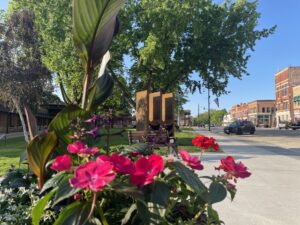
Our team has developed a comprehensive conservation plan for the Crystal River. The City of Waupaca is focused on enhancing recreational opportunities along the Crystal River and promoting sustainable use while preserving the area’s natural beauty. A significant concern regarding the river is the Felt Mill Dam and its aging infrastructure, which poses the risk […]
Read More… from Envisioning a river restoration along the Crystal River in Waupaca
The Waupaca Energy and Transportation Sustainability Plan provides a strategic framework for incorporating sustainability into Waupaca’s future. This plan offers a roadmap for long-term environmental, economic, and social advantages by expanding the adoption of renewable energy and promoting sustainable transportation methods. This strategy was developed in partnership with graduate students from the UW – Madison […]
Read More… from Creating an energy and transportation sustainability plan for Waupaca
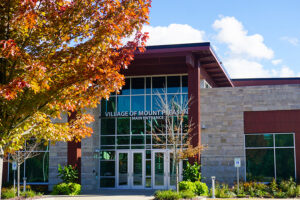
Environmental conservation planning students developed a plan for a 70-acre site in Village of Mount Pleasant. They proposed several strategies that include creating a native prairie landscape to establish pollinator habitat, prevent erosion, and provide space for recreation and cultural activities; removing invasive species, developing partnerships, and strengthening community engagement and outreach. Contact: UniverCityAlliance@wisc.edu […]
Read More… from Creating a conservation plan for a multi-use site in Mount Pleasant
Identified problem: Eau Claire County government buildings, specifically the Courthouse and Jail, experience elevated energy consumption, making up ~91% of Eau Claire County government electricity usage. The goals included providing further recommendations to improve energy efficiency and reduce energyconsumption and carbon emissions, particularly for the county courthouse and jail, and investigating renewable energy projects/options to […]
Read More… from Charting the path to carbon neutrality: Sustainable energy recommendations for Eau Claire County
A team of capstone students prepared recommendations that Outagamie County can use to electrify the public transportation sector. These include establishing a charging rebate program, changing building codes and zoning permits, staying updated on state and federal funding opportunities, and creating a committee of stakeholders to stay engaged on the issue. UniverCity Year Contact Info: […]
Read More… from Guiding Outagamie County policy and regulatory framework to support electric vehicles
The aim of this project is to provide resources and curricula to the Waunakee school district in order to guide and assist in teaching about Ho-Chunk culture, ecology, and history. This project has been developed through collaboration among representatives from Ho-Chunk Nation, the Village of Waunakee, and the Nelson Institute for Environmental Studies at UW-Madison. […]
Read More… from Developing Ho-Chunk educational curriculum for the Waunakee School District
This land acknowledgement was created in collaboration with the Ho-Chunk Nation, the Village of Waunakee, UniverCity Year, and the UW-Madison Nelson Institute of Environmental Studies. Specifically, we would like to thank Jessie Conaway, Sarah Lemiuex, Josie Lee, Ryan Greendeer, Tom Wilson, and Todd Schmidt for their support in creating this statement. This land acknowledgment was […]
Read More… from Exploring a land acknowledgment statement for Waunakee
In the spring of 2021, the University of Wisconsin-Madison Nelson Institute for Environmental Studies partnered with the Ho-Chunk Nation and the Village of Waunakee through UniverCity Alliance. Undergraduate Students in their Environmental Studies Capstone Class worked in collaboration with Ho-Chunk Nation and Waunakee to recommend guidelines and protocols for Ho-Chunk Nation cultural resource management in […]
Read More… from Developing cultural resources management protocol for Waunakee
The aim of this project is to educate visitors at Ripp Park about Ho-Chunk history, language, culture, and ecology. This project has been developed through collaboration among representatives from Ho-Chunk Nation, the Village of Waunakee, and the Nelson Institute for Environmental Studies at UW Madison. As a part of the UniverCity Year project in Waunakee, […]
Read More… from Designing community- based installations of Ho-Chunk culture in Ripp Park Waunakee
Travel routes used by the Ho-Chunk Nation wind their way through the Dejope or Four Lakes region, which includes Wisconsin. Though in some cases they have morphed into modern roads and walking paths, many of the original paths exist only in scattered historical records and living memory. Combining investigation and historical work and in collaboration […]
Read More… from Mapping Ho-Chunk cultural resources in Waunakee