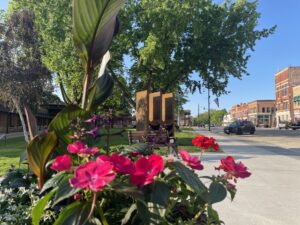
A recent survey of residents in the City of Waupaca revealed a strong desire to see improvements to Cary Pond, a reservoir held back by the Felt Mill Dam. Engineering students provided a comprehensive assessment of options for the site to recommend strategies and outline the potential ecological and recreational benefits associated with the removal […]
Read More… from Evaluating feasibility and benefits of removing the Light Plant Dam
Our team has developed a comprehensive conservation plan for the Crystal River. The City of Waupaca is focused on enhancing recreational opportunities along the Crystal River and promoting sustainable use while preserving the area’s natural beauty. A significant concern regarding the river is the Felt Mill Dam and its aging infrastructure, which poses the risk […]
Read More… from Envisioning a river restoration along the Crystal River in Waupaca
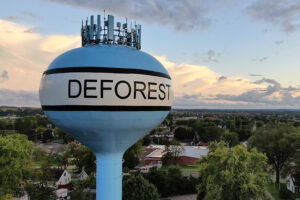
In preparation for expected growth, the Village of DeForest plans to conduct outreach to local stakeholders and property owners to better understand the attitudes and intentions of local farmers related to development. The goal of this effort is to balance development with environmental conservation planning and community well-being, align land use planning with future opportunities, […]
Read More… from Understanding conservation practices and future land use intentions among local stakeholders
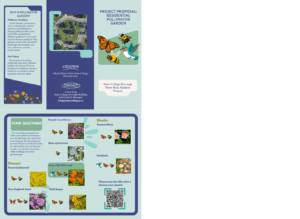
The town of State College is in the process of providing its residence with detailed guidance on promoting pollinators through pollinator gardening approaches and habitat. Students are asked to provide recommendations specific to the State College geography for the establishment of pollinator habitat/gardens in State College residential neighborhoods, including native plants materials, guidance on planting and […]
Read More… from Residential Pollinator Garden Guide for State College Borough
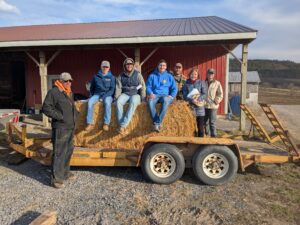
The USDA office in Huntingdon County is interested in promoting regenerative farming practices. While there has been some interest among the farming community, more could be done. The USDA office would like to provide leadership by working with local farmers to explore regenerative practices and possibly establish demonstration sites. Students had the opportunity to visit […]
Read More… from Regenerative Grazing Initiative in Huntingdon County
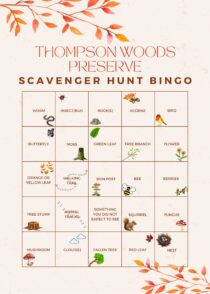
Thompson Woods Preserve (TWP) is a 43.36-acre natural area consisting of trails and natural ecological features. This public preserve offers a unique natural setting within walking distance of the surrounding urban environment of downtown State College and the Pennsylvania State University. TWP property is jointly owned by College Township and the Borough of State College. […]
Read More… from Educational Material for Thompson Woods Preserve
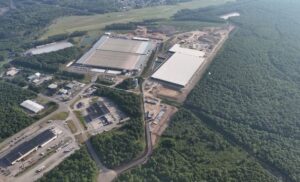
Little Leaf Farms, a hydroponic greenhouse operation that grows lettuce, occupies about 160 acres of land on a mountaintop near Hazleton, PA. Its greenhouses do not cover all the land and its operation produces nutritious peat and ‘waste’ water – water enriched with nutrients for growing the lettuce. Little Leaf is interested in learning how […]
Read More… from Analysis of Soil and Water Reuse at Little Leaf Farm
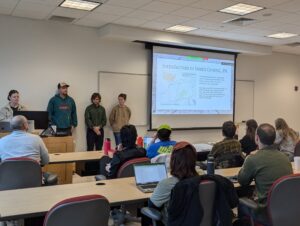
The Department of Conservation and Natural Resources Bureau of Forestry is interested in regenerating core sites using best management practices that encourage natural regeneration. In part due to practice of high grading and other economic trends, Pennsylvania forests contain more low-grade wood than ever, hence the Bureau is interested to identify markets and/or usage of […]
Read More… from Optimizing Utilization of Low-Grade Wood in Pennsylvania Forests
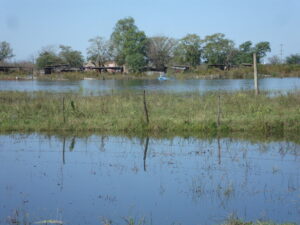
The Mapuche Community of Campo La Cruz was settled on the outskirts of Junín, Buenos Aires, Argentina, following a process of colonization and conquest during the 19th century. Located on the temperate plains of the humid pampas, its ecosystem consists of grasslands and prairies, although the expansion of agriculture and the city replaced much of […]
Read More… from Sustainable management of natural environments of a Mapuche community in the city of Junín, Buenos Aires: environmental impacts and risks in the face of climate change
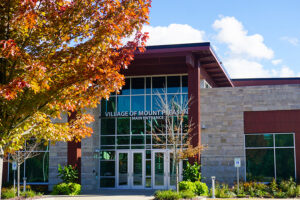
Environmental conservation planning students developed a plan for a 70-acre site in Village of Mount Pleasant. They proposed several strategies that include creating a native prairie landscape to establish pollinator habitat, prevent erosion, and provide space for recreation and cultural activities; removing invasive species, developing partnerships, and strengthening community engagement and outreach. Contact: UniverCityAlliance@wisc.edu […]
Read More… from Creating a conservation plan for a multi-use site in Mount Pleasant