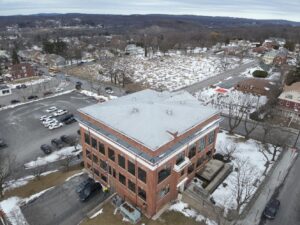
The Hazleton Police Department moved to a new facility that used to be a former school in City of Hazleton. The school building has received energy efficient upgrades and the City administration is interested in exploring solar for and adjacent to the building to offset its energy use. Students explored the feasibility of rooftop solar […]
Read More… from Solar Feasibility for the City of Hazleton Police Department
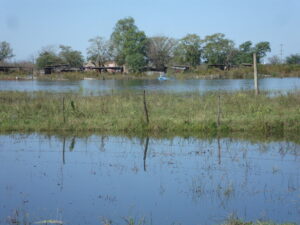
The Mapuche Community of Campo La Cruz was settled on the outskirts of Junín, Buenos Aires, Argentina, following a process of colonization and conquest during the 19th century. Located on the temperate plains of the humid pampas, its ecosystem consists of grasslands and prairies, although the expansion of agriculture and the city replaced much of […]
Read More… from Sustainable management of natural environments of a Mapuche community in the city of Junín, Buenos Aires: environmental impacts and risks in the face of climate change
The Port of Willapa Harbor hosts numerous businesses dedicated to growing cannabis indoors. The economics for cannabis production and value-added products continues to evolve as additional states pursue legalization and changes are proposed for federal restrictions on banking services and controlled substance use. Existing tenants of the Port who grow cannabis and/or prepare/distribute cannabis-based products […]
Read More… from Alternative Business Uses for Cannabis Growing Facilities
This project will focus on a plan for downtown Raymond’s revitalization, emphasizing infrastructure improvements and economic development for “Main Street,” and considering a “creative district” attraction/development. Community, Environment, and Planning (CEP) students will interview Raymond stakeholders (city staff, council, and community leaders), and produce a final report summarizing their findings, relevant case studies, analysis, and […]
Read More… from Downtown Raymond Revitalization
Electric vehicle charging infrastructure must be rapidly developed over the next decade to ensure satisfactory capacity for expected needs by both residents of Pacific County and visitors. Seasonal tourism to the county (especially to the Long Beach Peninsula for fishing, clamming, fireworks, kite flying, sports tournaments, miscellaneous festivals) attracts tens of thousands of visitors on […]
Read More… from EV Charging Station Needs Assessment and Idealized Mapping
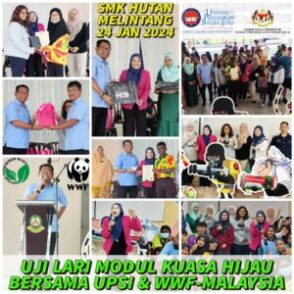
GreenQuest is a dynamic environmental education initiative that merges E-Sports, digital gamification, and sustainability learning in a way that is both academically rigorous and deeply engaging for young learners. Aligned with the EPIC-N Model (Educational Partnerships for Innovation in Communities Network), the program emphasizes sustained university-community-school collaboration to solve real-world environmental challenges through innovative, education-driven […]
Read More… from GreenQuest: E-Sport Environmental Education for Future Sustainability
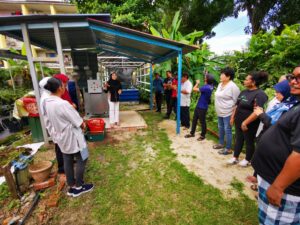
The Strengthening Environmental Conservation project is a collaborative effort between Universiti Pendidikan Sultan Idris (UPSI) through its EduGreen Centre, the Habitat Foundation, and the Ayer Hitam Community Centre, aimed at promoting sustainable food waste management and environmental education in communities surrounding Georgetown, Penang. This initiative centers around empowering local schools, teachers, and residents through training, […]
Read More… from STRENGTHENING ENVIRONMENTAL CONSERVATION IN PENANG: RESEARCH, INTRODUCTION AND EDUCATION OF ECONOMIC FOOD WASTE COMPOSTER (EFWC) AROUND PENANG HILL BIOSPHERE RESERVE
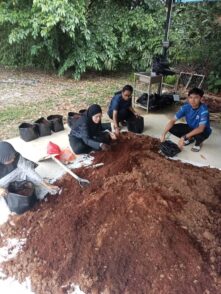
CampusRoots is a sustainability-driven initiative led by Professor Dr Che Zalina Zulkifli with the EduGreen Centre Student Committee at Universiti Pendidikan Sultan Idris (UPSI), in strategic partnership with Urbanest Sdn. Bhd., PPD Bagan Datuk Perak, MARDI an eco-focused industry and local governments collaborator. This project embodies the principles of the EPIC-N model, integrating academic knowledge, […]
Read More… from CampusRoots: EPIC-N Composting for Sustainable Living
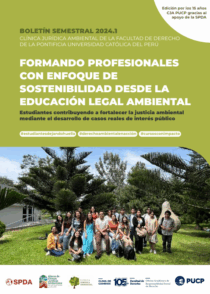
En este primer semestre del 2024, la Clínica Jurídica Ambiental de la PUCP ha reafirmado su compromiso con la educación legal ambiental y la defensa de la justicia ambiental en el Perú. A través del análisis y desarrollo de casos reales, los estudiantes han puesto en práctica estrategias jurídicas para la protección del medio ambiente, […]
Read More… from Boletín 2024.1
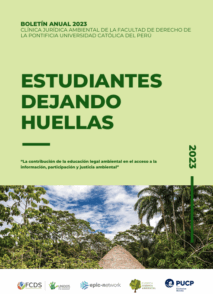
Durante el año 2023, la Clínica Jurídica Ambiental de la PUCP consolidó su compromiso con la educación legal ambiental y la defensa del derecho a un medio ambiente saludable. A través del trabajo interdisciplinario de estudiantes, docentes y voluntarios, se abordaron diversas problemáticas ambientales de relevancia nacional e internacional, impulsando el acceso a la justicia […]
Read More… from Boletín Anual 2023