Greening Quarry Road and Pholani Informal Settlement: EPIC African in Action
Metrics
Community
Quarry Road and PholaniUniversity
Durban University of Technology (DUT)Status
CompletedCase Type
Partnership StoriesFocus Areas
Compost, Environment Sustainability, SustainabilityRegion
AfricaSustainable Development Goals
11 Sustainable Cities and Communities, 13 Climate Action, 3 Good Health and Well-BeingAt the heart of EPIC Africa Durban is a commitment to building meaningful partnerships between universities and communities to co-produce knowledge, drive local action, and respond to pressing urban challenges. The Greening Initiative in Quarry Road and Pholani is a powerful example of this approach in practice—where community leadership, academic support, and municipal collaboration come together to create sustainable change.
Co-Producing Solutions: Composting for Healthier Communities
Working in partnership with the Durban University of Technology (DUT), Zero Waste, and the eThekwini Municipality Agroecology Unit, EPIC students and community members co-designed and implemented a composting initiative that responds directly to local waste management challenges.
Following training sessions and hands-on implementation, community members began transforming organic waste—such as old vegetables and household wet waste—into compost. This not only reduces the volume of waste in the settlement but also addresses critical public health concerns. With inconsistent waste collection, uncollected refuse often becomes a breeding ground for pests, particularly rats. Composting offers a practical, locally driven solution to this issue.
The initiative also reflects the importance of building local partnerships. A nearby supermarket, which previously disposed of its waste into the river, is now contributing wet waste to the composting system—reducing environmental pollution and strengthening community-led environmental stewardship.
Through EPIC, this work goes beyond training—it is about building long-term capacity. The community has taken ownership of the process, ensuring that composting continues as a sustainable, embedded practice.
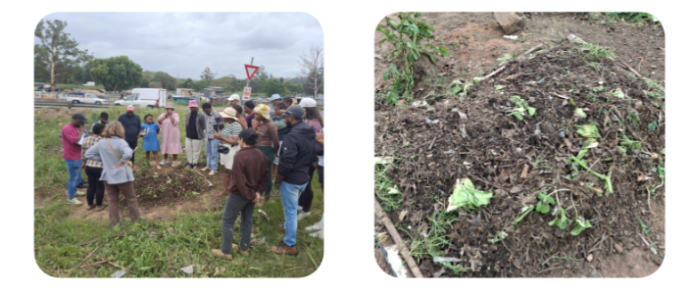
Figure.1&2– Quarry Road residents and EPIC students at a community composting site.
Innovation in Context: Vertical Gardening
In response to the spatial constraints of informal settlements, the initiative introduced vertical gardening—a low-cost, adaptable solution for urban food production.
Using recycled materials such as wooden pallets and old sacks, community members in Quarry Road developed vertical gardens that maximise limited space while reinforcing principles of reuse and sustainability. A demonstration site was established at one household, creating a living learning space where knowledge can be shared and adapted across the community.
This reflects a core EPIC principle: solutions must be locally appropriate, resource-conscious, and driven by the realities of the communities they serve.
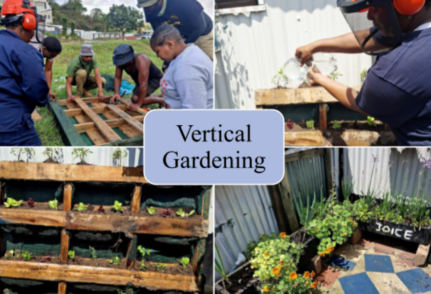
Figure. 3- Vertical Gardening Initiative at Quarry Road informal settlement
Peer-to-Peer Learning: Extending Impact to Pholani
A defining feature of EPIC Africa is the emphasis on knowledge exchange. The success in Quarry Road created an opportunity to extend the initiative to Pholani through a “training the trainers” model.
Community members from Quarry Road, supported by Zero Waste and EPIC students, facilitated composting training for the Pholani community. This peer-led approach strengthens local ownership and ensures that knowledge is transferred in ways that are accessible and contextually relevant.
In Pholani, where land is available adjacent to the settlement, community members cleared and prepared the area for planting. With support from the UKZN team, seedlings were provided and a variety of crops were planted, including spinach, potatoes, onions, mealies, and green peppers—contributing to improved food security and livelihoods.
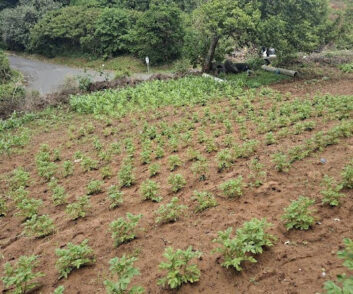
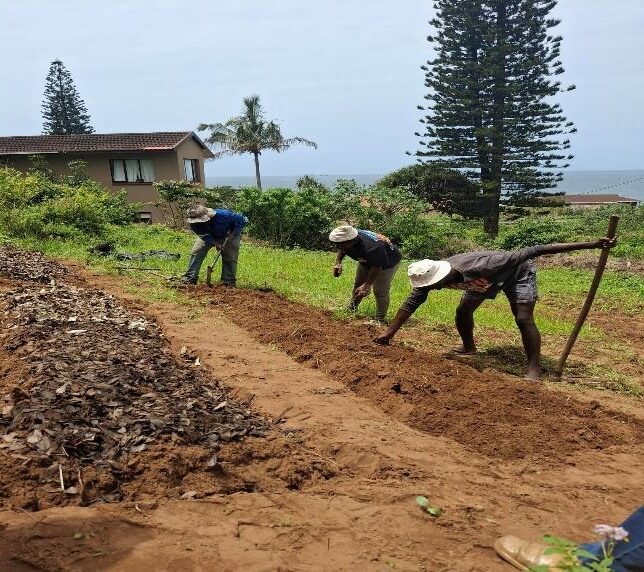
Figure. 3: Food Gardening at Pholani Informal Settlement- Figure.4: Making of Swales at Pholani Informal Settlement.
Responding to Challenges Together
As with many community-led initiatives, challenges remain. Limited access to water, a lack of gardening tools, and the need for secure fencing have been identified as ongoing barriers. Additionally, environmental pressures such as flooding and wildlife—particularly monkeys—pose risks to crop sustainability.
True to the EPIC model, these challenges are not addressed in isolation. Through continued collaboration, adaptive solutions are being explored. For example, Zero Waste facilitated training on swales—a technique that helps manage water flow and prevent crops from being washed away in flood-prone areas.
Building Resilient, Connected Communities
The greening of Quarry Road and Pholani demonstrates what is possible when communities, universities, and local partners work together through the EPIC framework. This is not just about environmental improvement—it is about strengthening relationships, building local capacity, and supporting communities to lead change in their own contexts.
Through initiatives like these, EPIC Africa Durban continues to foster inclusive, community-driven innovation—showing that sustainable urban futures are built through collaboration, trust, and shared knowledge.
By: Nkosinathi Mncwabe
EPIC Africa Durban Coordinator