The Mapuche Community of Campo La Cruz was settled on the outskirts of Junín, Buenos Aires, Argentina, following a process of colonization and conquest during the 19th century. Located on the temperate plains of the humid pampas, its ecosystem consists of grasslands and prairies, although the expansion of agriculture and the city replaced much of the original vegetation. Members of the Mapuche community joined Junín early on as suppliers of handcrafted adobe bricks, giving rise to a productive tradition that is a key component of their identity. This practice has significant environmental impacts, which led to conflicts with the municipal government, which sought to prohibit land extraction and halt environmental damage. From a transdisciplinary perspective, our goal is to collaboratively co-design Ecosystem-based Adaptation strategies to improve the management of the community’s environment, respecting its productive and reproductive traditions, in order to increase resilience and adaptation to climate change. To this end, we propose to conduct a diagnosis and assessment of the environmental risks linked to climate change for the city’s urban and peri-urban ecosystem; promote the environmental remediation of the “slums” generated by brickmaking activity in Campo La Cruz; and encourage a progressive productive conversion from traditional adobe brick manufacturing to ecological alternatives such as bricks made from recycled plastics. These initiatives will help people adapt to climate change, reducing social and environmental vulnerability, reducing the risk of flooding, and contributing to food and livelihood security, in an action that revalues the community’s cultural identity. Environmental remediation increases the resilience of grasslands to climatic variations, helps stabilize the soil and retain moisture, promoting the development of biodiversity. Furthermore, the production of ecological bricks reduces greenhouse gas emissions, promotes energy efficiency, and contributes to a waste management strategy, reducing pollution in the urban ecosystem.
Site Search:
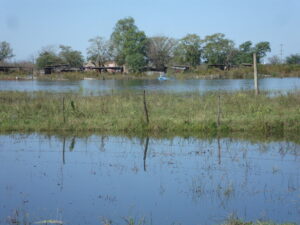
Sustainable management of natural environments of a Mapuche community in the city of Junín, Buenos Aires: environmental impacts and risks in the face of climate change
Constanza Riera
Metrics
- University University of Buenos Aires
- Sustainable Development Goals 03 Good Health and Well-Being, 06 Clean Water and Sanitation, 07 Affordable and Clean Energy, 09 Industry Innovation and Infrastructure, 10 Reduced Inequalities, 11 Sustainable Cities and Communities, 12 Responsible Consumption and Production, 13 Climate Action, 15 Life on Land
- University Department Geography
- Lead Local Gov / Community Partner Org Name Comunidad Mapuche Campo La Cruz