EPIC Durban Builds Capacity for Young Professionals and Students
By: Ada Inman
Following the African regional EPIC-N training in November 2017, the City of Durban and the University of KwaZulu-Natal began implementing the Durban EPIC pilot project within the Durban Research Action Partnership (DRAP). The Durban EPIC pilot project connects Environmental Planning and Climate Protection Department (EPCPD) from eThekwini Municipality (city of Durban) and related departments from the University of KwaZulu Natal (UKZN).
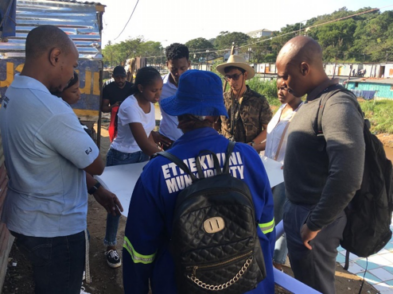
In January 2019, DRAP implemented a full EPIC pilot programme across multiple city line functions and academic disciplines, within the City-funded Global Environmental Change research programme. At the moment the School of Built Environment and Development Studies with the following disciplines: Housing, Planning, Community Development, Development Studies and Population Studies, as well as the School of Engineering are involved in the programme. The pilot included an internship component for students within eThekwini Municipality.
The Durban EPIC pilot programme was implemented through the School of Built Environment and Development Studies (BEDS), within the Palmiet Catchment Rehabilitation Project (PCRP).
The PCRP is led by a Community of Innovators, including academic staff and emerging researchers at BEDS, staff of the Environmental Planning and Climate Protection and other departments (EPCPD) of eThekwini Municipality, Palmiet-based civil society groups and community leaders of the Quarry Road West Informal Settlement (QRWIS). The PCRP established a list of research questions, mostly focused on challenges within the QRWIS, and often related to climate change, which BEDS post-graduate MSc students focused on in one month action internships within EPCPD.
The Durban EPIC pilot is a part of the EPIC Africa network which was established by city/ academic partners who attended the November 2017 training. In the Durban EPIC, the partnering departments at the University of KwaZulu Natal, offer a taught EPIC A module which aims to acquaint students with contemporary issues through an internship-based model. It grants students the opportunity to engage in practical work which complements the theory-oriented modules. The student’s research projects are co-developed by student and municipal officials to ensure that research outputs feed into the work of the municipality. Students are expected to write policy briefs which are submitted to the municipal and used by relevant departments. The themes on which the projects are focused, are identified by municipality as important for the work of the city, the research outputs then feed directly to municipality.
Learn more about the University of KwaZulu-Natal’s EPIC Model Program here.
Access Full Project Reports
Many of the EPIC-N Member Commons Project Library entries include links to the full reports generated for each distinct project. Sign up for a free EPIC-N membership to gain access to the full project report (and other project examples).
You can use your account to explore other resources available to help you adopt the EPIC Model in your own college or university, city, county, special district, or community group.
Becoming a member of the EPIC-Network is easy and free (for a limited time). To join, simply create an account. After creating your account, use the “Request Support” button to set up meetings with EPIC-N Support Staff.
Feedback
EPIC-N is committed to continuous improvement and providing quality resources to our members. If you have recently used the EPIC-N “Who’s in the Network” map, please complete this quick form.