Partnership Spotlight: Enhancing Disaster Preparedness of Lakeshore Communities in Calamba City, Laguna, Philippines
Calamba is the largest city in the province of Laguna, Philippines. It is the regional center of the Calabarzon Region, and in 2020, it was home to a population of 539,671.
The city is part of the province that has been identified as one of the most vulnerable to climate change. Despite the various measures of the local government units, the city, and the wider province, still suffers massive damages brought about by typhoons, flooding, and landslides.
With the 2011 Seed Grant provided by UNEP-GAN through START, various city departments and agencies collaborated with the University of the Philippines Los Baños to employ the EPIC Model on the “Enhancing Disaster Preparedness of Lakeshore Communities in Calamba City, Laguna, Philippines” project. The project is divided into two components, “Information and Education Campaign on Sanitation and Waste Management During Flooding in the time of the Pandemic” and “Revisiting Disaster Plans of Lakeshore Communities of Calamba.” The project aimed to promote health and sanitation measures, as highlighted by SDG 3: Good Health and Well-being and SDG 6: Clean Water and Sanitation. More importantly, the project aimed to capacitate and support the barangay (district/community) officials in improving their respective disaster plans to combat climate change and its impacts, as reflected in SDG 13: Climate Action.
Involving departments and agencies from the City of Calamba include:
- Agricultural Services Department
- Environment and Natural Resources Office
- Information, Investment Promotions, and Employment Development Services Office
- Planning and Development Office
- Disaster and Risk Reduction and Management Office
Students from two colleges from the University were involved in this project. The two colleges are:
- College of Development Communication
- College of Public Affairs and Development
Activity 1. Information and Education Campaign on Sanitation and Waste Management During Flooding in the time of the Pandemic
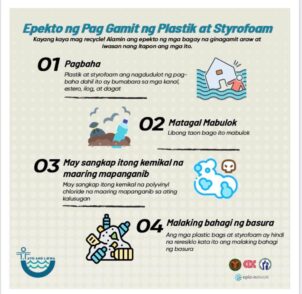
The College of Development Communication, through the graduate students of Communication Approaches in Development Programs, collaborated with various offices and units at Calamba City and with the community leaders of the 10 lakeshore communities in developing a communication plan. The communication plan aims to guide the local implementers in communicating measures on maintaining sanitation and waste management during flooding. The plan outlined key messages, approaches, prototype information, and education communication materials. In addition, it took into consideration health protocols mandated during the COVID-19 pandemic.
Specific activities include:
- Coordination with the university, local government unit, and community partners
- Inception Meeting
- Data Gathering for Situation Analysis
- Data Gathering for Audience Analysis
- Preparation of the Communication Plan
- Presentation of Communication Plan
- Printing and Distribution of Information and Education Communication Materials to the Community and Partner Agencies
- Evaluation of Information and Education Communication through interview of Selected Household
Outputs of these activities include
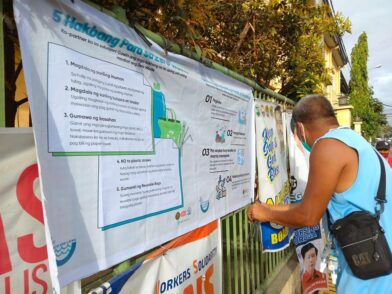
- Tarpaulins printed with information on the harmful effects of plastics and five steps to zero waste were distributed to the ten lakeshore barangay offices.
- Two sets of calendars stating legislation about the Solid Waste Management Act and the 5Rs of Solid Waste Management (Reduce, Reuse, Recycle, Restore, and Restore) were printed and distributed to households in the communities.
- Leaflets were also distributed to the community’s youth to ensure that the younger generation is also made aware and encouraged about good practices of Solid Waste Management.
A focus group discussion was conducted after a week of distributing the materials. It was found that the message in the Information and Education Campaign materials about solid waste management was simple enough for people to understand. Similarly, the calendars for the household provided an effective strategy of being reminded about the Solid Ecological Management Act and the 5Rs. The government officials further added that tarpaulins are good reinforcements to their usual platform of disseminating information about the communities. Lastly, for younger children, the terms and drawings showcased in the leaflets help guide them toward good environmental protection practices.
Read about Activity 2 and the project outcomes here.