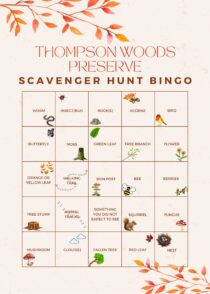
Thompson Woods Preserve (TWP) is a 43.36-acre natural area consisting of trails and natural ecological features. This public preserve offers a unique natural setting within walking distance of the surrounding urban environment of downtown State College and the Pennsylvania State University. TWP property is jointly owned by College Township and the Borough of State College. […]
Read More… from Educational Material for Thompson Woods Preserve
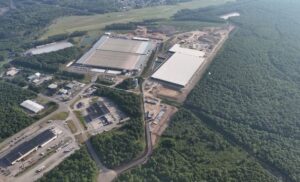
Little Leaf Farms, a hydroponic greenhouse operation that grows lettuce, occupies about 160 acres of land on a mountaintop near Hazleton, PA. Its greenhouses do not cover all the land and its operation produces nutritious peat and ‘waste’ water – water enriched with nutrients for growing the lettuce. Little Leaf is interested in learning how […]
Read More… from Analysis of Soil and Water Reuse at Little Leaf Farm

Cottonwood Crossing Summer Institute (CCSI) is a week-long residential field studies program for high school students held in Cottonwood Canyon State Park. Participants choose from course options where they learn about locally significant cultural or natural resources. Projects are led by EOU faculty, EOU student interns, and other regional professionals. […]
Read More… from Cottonwood Crossing Summer Institute
El acceso a la salud y el gozar de ella es un requisito básico que nos permite construir una sociedad más equitativa ya justa para el cuidado y protección del medio ambiente. Constituyen condiciones indispensables para el bienestar de las personas y uno de los componentes fundamentales para la prosperidad y el desarrollo de las […]
Read More… from Acciones para favorecer la educación para la salud y ambiental en comunidades de zonas costeras del municipio Manzanillo
The Freshwater Society’s (FWS) Master Water Stewards (MWS) program develops, certifies, and supports community volunteer leaders to manage stormwater at a neighborhood scale to improve water quality. As part of the training program, MWS complete a capstone project in their watershed to infiltrate stormwater into the ground. MWS can use the MIDS calculator to determine […]
Read More… from Examining Urban Agriculture as a Stormwater Best Management Practice
The Freshwater Society’s (FWS) Master Water Stewards (MWS) program develops, certifies, and supports community volunteer leaders to manage stormwater at a neighborhood scale to improve water quality. After a successful pilot, the FWS is preparing to expand the MWS program to watershed districts and cities state-wide. As the program expands, the FWS needs to provide […]
Read More… from Designing Urban Garden Perimeter Plantings
The City of Elk River has not investigated its position on climate change and adaptation or its potential effects on the ecology and landscape of the city. Using climate models, Conservation Biology students will explore potential effects of climate change on specific tree species, focusing on street trees. Students will examine how climate change may […]
Read More… from Examining Effects of Climate Change on Tree Species
Evaluate three parcels in Chaska that have been identified as potential sites for a solar field. Results of this project will lead to development of renewable green power to serve Chaska residents and the municipal utility. Read the final student report delivered to the local gov/community partner. Resilient Communities Project Contact Info University Faculty Contact […]
Read More… from Chaska Solar Fields
Determine options for integrating renewable energy sources into Carver County government buildings, including the government center in Chaska and the public works building in Cologne. Read the final student report delivered to the local gov/community partner. Resilient Communities Project Contact Info University Faculty Contact Min Addy Bioproducts and Biosystems Engineering Local Government / Community Contact […]
Read More… from Facility Energy Use
The City of Elk River is working to improve water quality in its lakes and rivers. As a part of this effort, Elk River is examining the overall management of Lake Orono to build a better understanding of the lake as a whole. Environmental Problem Solving students will build upon the work of Aquatic Biology […]
Read More… from Modeling Pollutant Levels in Lake Orono After Rainfall Events