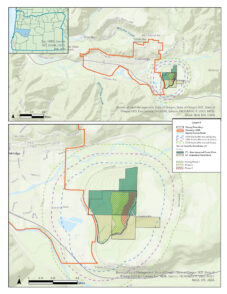
StoneBroke LLC proposed the development of Old Hazeldell Quarry, a gravel quarry located on TV Butte just outside of Oakridge, Oregon. The City of Oakridge partnered with students from the University of Oregon to preliminarily evaluate and map the potential environmental impacts of the proposed quarry using publicly available ArcGIS data sets. Specific concerns regarding […]
Read More… from TV Butte Quarry: Environmental Impact Assessment

This project addresses the City of Oakridge’s capital improvement planning and potential funding sources for the city’s aging infrastructure, focusing primarily on the wastewater treatment facility (WWTF). Throughout the term students and faculty toured the WWTF, and other locations and produced a SWOT (Strengths/Weaknesses/Opportunities/Threats) analysis. After aggregating and organizing best practices research from comparable communities […]
Read More… from Wastewater Treatment Facility Analysis and Capital Improvement Plan Development
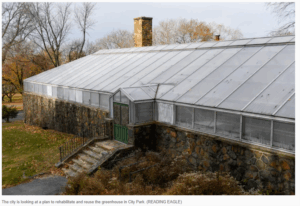
The City of Reading owns a large greenhouse, 6,500sqft in City Park that has been vacant since 2018. The City is interested in using the Greenhouse to educate the public about growing plants and sustainable food systems, promote the local farmers market and local food initiatives, serve for training and workforce development purposes, and to […]
Read More… from Revitalizing the City of Reading Greenhouse as a Community Space
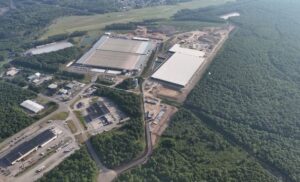
Little Leaf Farms, a hydroponic greenhouse operation that grows lettuce, occupies about 160 acres of land on a mountaintop near Hazleton, PA. Its greenhouses do not cover all the land and its operation produces nutritious peat and ‘waste’ water – water enriched with nutrients for growing the lettuce. Little Leaf is interested in learning how […]
Read More… from Analysis of Soil and Water Reuse at Little Leaf Farm
The Department of Conservation and Natural Resources Bureau of Forestry is interested in regenerating core sites using best management practices that encourage natural regeneration. In part due to practice of high grading and other economic trends, Pennsylvania forests contain more low-grade wood than ever, hence the Bureau is interested to identify markets and/or usage of […]
Read More… from Optimizing Utilization of Low-Grade Wood in Pennsylvania Forests
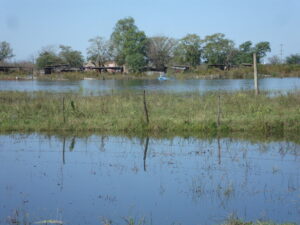
The Mapuche Community of Campo La Cruz was settled on the outskirts of Junín, Buenos Aires, Argentina, following a process of colonization and conquest during the 19th century. Located on the temperate plains of the humid pampas, its ecosystem consists of grasslands and prairies, although the expansion of agriculture and the city replaced much of […]
Read More… from Sustainable management of natural environments of a Mapuche community in the city of Junín, Buenos Aires: environmental impacts and risks in the face of climate change
The Granite Falls City Council has directed staff to seek a functional design for lots adjacent to the “Granite Falls Municipal Campus”, which could include an open space plaza area for civic events and a future community center building. The City of Granite Falls wishes to receive sound assistance to evaluate all options surrounding land […]
Read More… from Municipal Campus Property Evaluation
The Port of Willapa Harbor hosts numerous businesses dedicated to growing cannabis indoors. The economics for cannabis production and value-added products continues to evolve as additional states pursue legalization and changes are proposed for federal restrictions on banking services and controlled substance use. Existing tenants of the Port who grow cannabis and/or prepare/distribute cannabis-based products […]
Read More… from Alternative Business Uses for Cannabis Growing Facilities
This project will focus on a plan for downtown Raymond’s revitalization, emphasizing infrastructure improvements and economic development for “Main Street,” and considering a “creative district” attraction/development. Community, Environment, and Planning (CEP) students will interview Raymond stakeholders (city staff, council, and community leaders), and produce a final report summarizing their findings, relevant case studies, analysis, and […]
Read More… from Downtown Raymond Revitalization
Envision a master plan for development of commercial properties and public access along South Bend’s Willapa River frontage extending from the South Bend Boat building to the Willapa Hills Trailhead at Summit Avenue in Raymond. A requisite goal is to extend the terminus of the Willapa Hills State Park Trail (currently ending/beginning at Summit Avenue) […]
Read More… from South Bend Waterfront Revitalization Plan