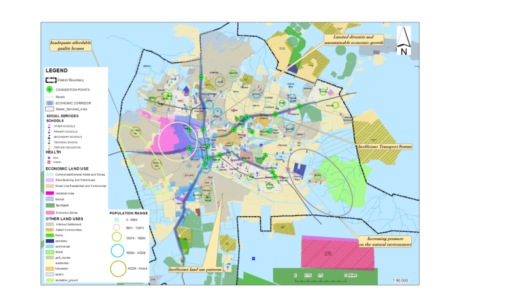
Lusaka’s first international EPIC team began training in 2016-2018, and shortly thereafter, they embarked on a series of experimental projects at the University of Zambia on a range of city-wide issues including climate adaptation, pandemic risk-reduction, and city planning. The overarching objective was to ensure the alignment of new EPIC programs with the existing university […]
Read More… from Driving Change in Lusaka: The EPIC Model’s Role in Transforming the City
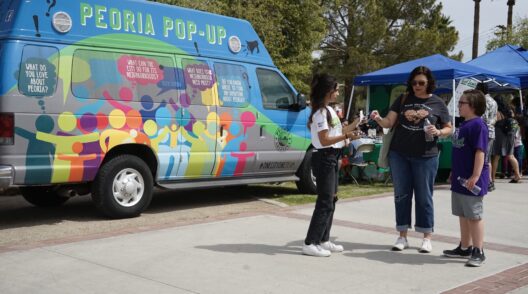
The City of Peoria, Arizona, is a fast growing scenic suburb of Phoenix. Named the best place to live in Arizona by Money Magazine in 2018 and the best place to live, work and play in Arizona by Ranking Arizona in 2021, the city is well-regarded for its thriving economy and exceptional school districts. Founded […]
Read More… from The City of Peoria achieves sustainability goals with help from ASU students
The City of Glendale, Arizona, may have once been a small farming town, but it has grown into a bustling city home to a diverse population of approximately 250,000 residents. Known as “Arizona’s Antique Capital,” thanks to its many historic buildings, there is nothing old about the city. Glendale houses popular hubs like the Westgate […]
Read More… from The City of Glendale Receives Strategies for Local Sustainability Goals From the Project Cities Program

Arid communities such as Peoria are often in search of innovative and sustainable heat mitigation solutions. Urban forestry is a growing practice that can help reduce energy consumption, increase pedestrian comfort, and provide environmental benefits such as filtering pollutants from urban air. The Fall 2020 portion of the project, summarized in Part 2 of this […]
Read More… from Community Forestry Program Development Project (2/2)

Students from several classes devise ways to upgrade and renew affordable housing in Door County that have been deemed poor quality. These units will use solar energy to reduce the cost for residents. The students were sure to provide childcare options, green spaces, safe parking, and access to highways. UniverCity Year Contact Info Gavin Luter […]
Read More… from Affordable Housing Site analyses
The Egg harbor wastewater treatment plant’s energy use was deemed ineffective so students were tasked with finding alternative source of energy for the plant. They proposed a Water Source Heat Pump using waste water effluent. UniverCity Year Contact Info Gavin Luter Managing Director gavin@cows.org 608-261-1141 […]
Read More… from Alternative Energy Solutions for the Egg Harbor Wastewater Treatment Plant
The Village of Egg Harbor is currently updating its Comprehensive Plan. Because parking impacts tourism, local businesses, traffic congestion, and walkability, it is important to identify and address parking related issues impacting the downtown study area. However, any discussion of parking must take place within the context of the community’s overall vision for the future. […]
Read More… from Egg Harbor Parking Study
The Village of Egg Harbor is located on Lake Michigan and has a permanent population of about 250 residents. Approximatly 40% of the population is above the age of 60 and in retirement. Because of its location on lakeside property, Egg Harbor sees a dramatic increase in population during the summer months due to tourism. […]
Read More… from Designing affordable housing for Egg Harbor
Exposure to extreme heat can cause a multitudeof adverse health impacts including heat cramps, heat exhaustion, heat stroke, andeven death. Because of the significant hazardsthat heat presents, it is important to determine thedistributionof these outcomes. Studying this distribution in Milwaukee County isespecially vital because of the stark health inequities that exist. Although difficult to measure, […]
Read More… from Assessing the link between climate change-induced weather events, heat-related illness, and the disproportional impacts experienced by low-SES communities in Milwaukee County
This research papers provides an analysis of the housing distribution within the city of Milwaukee and how minority groups are at a more significant disadvantage health wise. Climate change, redlining, and fossil fuel burning were among the most notable reasons as to why these health differences exist. This projected conducted in partnership with the Milwaukee […]
Read More… from Exploring equity and climate change in Milwaukee County