
In collaboration with the San Diego State University Sage Project, undergraduate student researchers contributed to the Black Women’s Resilience Project (BWRP) by conducting a qualitative research study in their Politics of Health Communication course (COMM 422). The goal of this study was to identify the connections between the guaranteed income (GI) initiative and health among […]
Read More… from Using a Culture-Centered Approach to Explore the Potential Impacts of Guaranteed Income on Black Women’s Health in San Diego

Khea Pollard, CEO of Cafe X: as well as the creative mastermind for the Black Women’s Resilience Project has dedicated her career to supporting and advocating for communities of color in her residing city of San Diego. Cafe X serves as a hub and according to Khea: “It’s more than just coffee, it’s a movement […]
Read More… from Black Women’s Resilience Project supported by Jewish Family Services: Sustainable Business Consulting Report

According to Moslimani et al. (2024), underpinned by the US Census microdata from 2022, the Black population of the US is growing, from 36.2 million self-identified Black people in 2000 to an estimated 47.9 million people in 2022; this is an increase of 32% in two decades, making up 14.4% of the country’s current population. […]
Read More… from Empowering Black Women in San Diego

With support from the Sage Project at San Diego State University and in collaboration with the Black Women’s Resilience Project (BWRP) and Jewish Family Service of San Diego (JFSSD), student researchers created a community needs assessment to collect information about the struggles of single Black mothers who live in the health equity zip codes established […]
Read More… from Socioeconomic Struggles and Opportunities with Guaranteed Income: Community Engagement, Self-Actualization, Healthcare, and Economic Mobility

In collaboration with the Jewish Family Service of San Diego (JFSSD) and under the guidance of the Sage Project, student researchers at San Diego State University collected existing data to aid the launch of the Black Women’s Resilience Project (BWRP)—a new initiative being launched by the JFSSD to support Black women living in San Diego. […]
Read More… from “Social Determinants of Health and Their Impact on Black Women in San Diego County: The Social, Economic, and Environmental Factors that Shape Health Outcomes”
The Get Outside After School Activity Program (GO-ASAP) offers middle school students activities including hiking, paddle boarding, rock climbing, mountain biking, and cross country skiing. Middle school students who are not involved in extra-curricular school activities are selected by area middle schools to participate in GO-ASAP. The goal of GO-ASAP is to provide students with […]
Read More… from Get Outside After School Activity Program (GO-ASAP)

This rural planning program involves Joseph officials working with Eastern Oregon University students and faculty members to develop a Buildable Lands Inventory. The goal is provide the city with information to support the long-term needs of Joseph. This documentation is being compiled by university graduate and undergraduate students performing policy analysis and reviewing city codes. […]
Read More… from City of Joseph Buildable Lands Inventory

This report discusses the Asset-based Community Development project conducted between March 1st and May 30th, 2022 in Hermiston, Oregon. The purpose of the three- phase project is to better understand the city’s assets as well as gaps in public service provision. Through an environmental scan, a survey, and a focus group, five investigators from Eastern […]
Read More… from Creating Shared Knowledge: An Asset-based Community Development Project in Hermiston
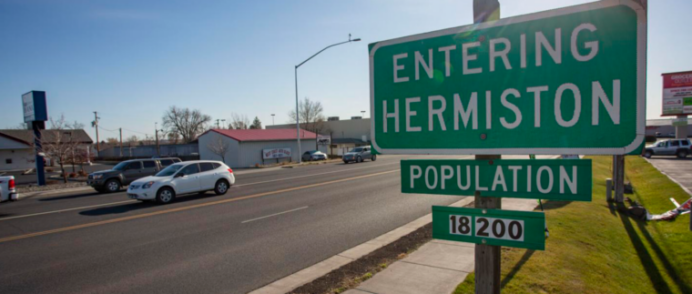
The City of Hermiston is a growing town located in the northeast part of Oregon. In the early 2000s, Hermiston had a population of about 13,000 people. With more homes and schools under construction, the town expects to reach a population of 20,000 in the next decade. Hermiston is a small town, and with a […]
Read More… from North Hermiston Local Circulation Plan

Recent economic investment of some of the largest companies in the US make Hermiston the fastest growing city in Eastern Oregon. As a result, Hermiston is experiencing rapid change in population growth and urbanization of rural land. The city of Hermiston presented students with the opportunity to present ideas for a site that is experiencing […]
Read More… from Building a Neighborhood: Community Development Strategies for North Hermiston