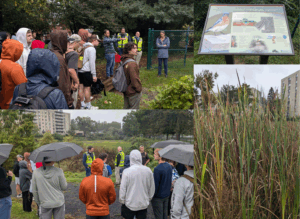
The Westerly Parkway wetland/detention basin at the intersection of Atherton and Westerly Parkway, was created to remediate the runoff from adjacent impervious surfaces. It was designed to provide education and as a greenspace for residents to explore unless water levels made the pathways unusable. With the new construction of the high school and associated developments in […]
Read More… from Improving Westerly Parkway Wetlands
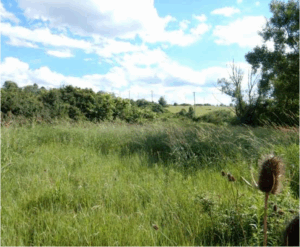
College Township, adjacent to State College and Penn State University Park’s campus, has experienced significant urban growth. Due to its location in the Spring Creek watershed and Chesapeake Bay watershed, sedimentation control due to stormwater runoff is important. This project involves retrofitting a 1.38-acre stormwater management basin in Penn Hills to include a runoff reduction […]
Read More… from Reducing Stormwater Basin Runoffs in College Township
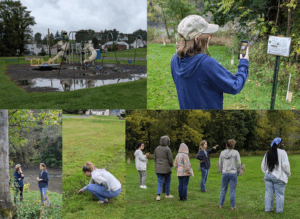
Coburn Park serves as the community park for Penn Township, consisting of a 15+ acres area along Penns Creek, with two picnic pavilions, a playground, baseball field and large open, mowed areas. Opposite the parking area for the park, is a swale that seems to collect stormwater runoff from the town of Coburn slightly uphill. […]
Read More… from Rain Garden Initiative in Coburn Park
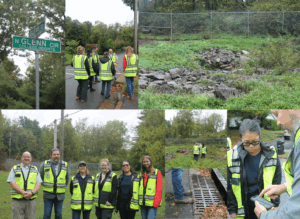
State College experienced a local street flooding issue at the intersection of Glenn Road and Taylor Street in the Borough. The street flooding did not occur during every rain event, only during heavier rainfall. The borough planned to have the pipe sections televised to verify the condition of the pipes and pipe sizes. Some drainage […]
Read More… from Stormwater Management in State College
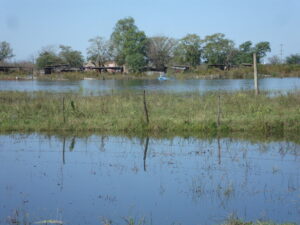
The Mapuche Community of Campo La Cruz was settled on the outskirts of Junín, Buenos Aires, Argentina, following a process of colonization and conquest during the 19th century. Located on the temperate plains of the humid pampas, its ecosystem consists of grasslands and prairies, although the expansion of agriculture and the city replaced much of […]
Read More… from Sustainable management of natural environments of a Mapuche community in the city of Junín, Buenos Aires: environmental impacts and risks in the face of climate change
The Mukilteo GIS department is currently developing an online historic walking map. They are interested in expanding this project to include city recreational opportunities, points of interest, and other features to encourage tourism and economic development in the city. The CEP student team will partner with the City to further develop this tool and advise […]
Read More… from Community Mapping Project
The Granite Falls City Council has directed staff to seek a functional design for lots adjacent to the “Granite Falls Municipal Campus”, which could include an open space plaza area for civic events and a future community center building. The City of Granite Falls wishes to receive sound assistance to evaluate all options surrounding land […]
Read More… from Municipal Campus Property Evaluation
This project will focus on a plan for downtown Raymond’s revitalization, emphasizing infrastructure improvements and economic development for “Main Street,” and considering a “creative district” attraction/development. Community, Environment, and Planning (CEP) students will interview Raymond stakeholders (city staff, council, and community leaders), and produce a final report summarizing their findings, relevant case studies, analysis, and […]
Read More… from Downtown Raymond Revitalization
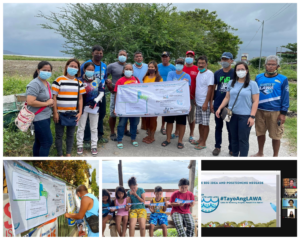
The project titled “Enhancing Disaster Preparedness of Lakeshore Communities in Calamba City, Laguna, Philippines” is a collaborative initiative between the University of the Philippines Los Baños (UPLB) and the City Government of Calamba, implemented under the EPIC-N framework. It was conceptualized to address the urgent needs of ten lakeshore barangays in Calamba that are highly […]
Read More… from Enhancing Disaster Preparedness of Lakeshore Communities in Calamba City, Laguna, Philippines
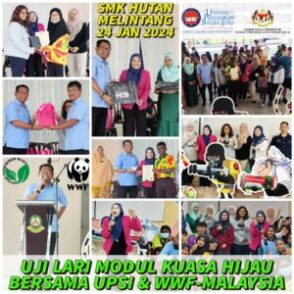
GreenQuest is a dynamic environmental education initiative that merges E-Sports, digital gamification, and sustainability learning in a way that is both academically rigorous and deeply engaging for young learners. Aligned with the EPIC-N Model (Educational Partnerships for Innovation in Communities Network), the program emphasizes sustained university-community-school collaboration to solve real-world environmental challenges through innovative, education-driven […]
Read More… from GreenQuest: E-Sport Environmental Education for Future Sustainability