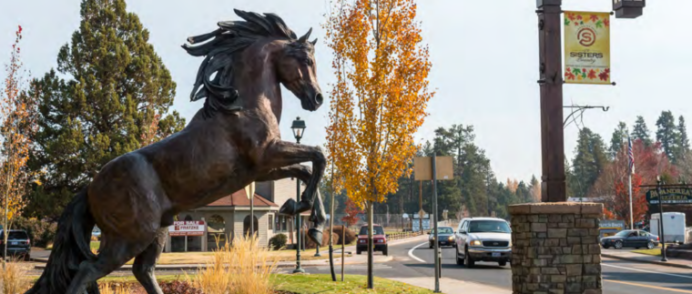
Over fall term 2022, Community and Regional Planning graduate students worked with the City of Sisters to design a research based redevelopment proposal for the Sisters Elementary School and Sisters School District administration building site. Students analyzed potential opportunities and challenges of revitalizing these two adjoining properties through three different lenses: 1) age friendly neighborhoods; […]
Read More… from A New Future for the Sisters Elementary School Site

This report contains the collected work of graduate student groups in PPPM 629: Public Budget Administration over the course of fall term 2022. These student groups conducted research to evaluate and forecast productivity of revenue generating activities for consideration by the city of Sisters to augment their Affordable Housing Reserve Fund. The revenue sources presented […]
Read More… from Financing Affordable Housing Subsidies in Sisters, Oregon: Creative Options and Evaluation of Potential Municipal Revenue-Generating Activities

This product is designed for Explore Sisters as a client of the University of Oregon’s Nonprofit Management Consultancy capstone course in Spring of 2023 in partnership with the University of Oregon’s Sustainable Cities Year Program. A team of four graduate students consulted for ten weeks by interviewing similar destination management organizations (DMO), facilitating a board […]
Read More… from Explore Sisters: Strategic Plan
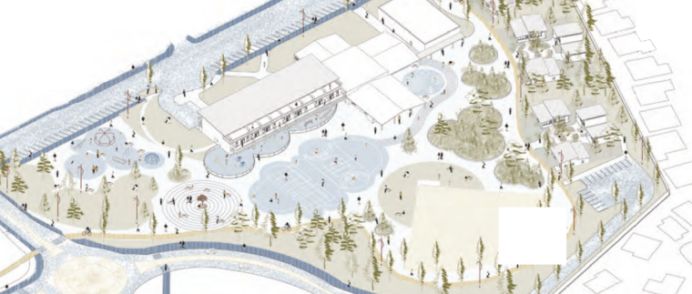
University of Oregon Architecture students proposed site designs and adaptive reuse ideas for the existing Sisters Elementary School and outdoor recreational uses and affordable housing. Student housing proposals fell into four main categories: 1) Housing on top of the school 2) Housing on the west side of the site 3) Housing in groups of clusters […]
Read More… from Reimagining Housing Options for the Sisters Elementary School Site
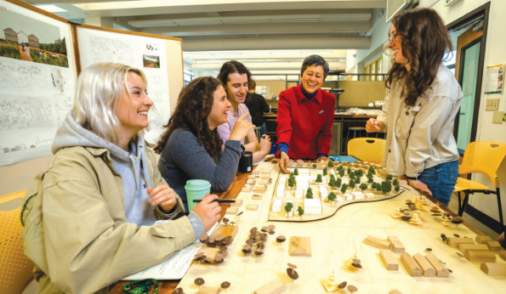
The city of Sisters identified the need for 1,100 housing units to accommodate its 2041 projected population growth and is exploring “efficiency measures” as an alternative to expanding its urban growth boundary. Final year Architecture students studied the situation and considered contemporary approaches to how people are choosing to live as the definition of “family” […]
Read More… from Co-Living for the Changing Family: Thriving through Sharing in Expandable Buildings
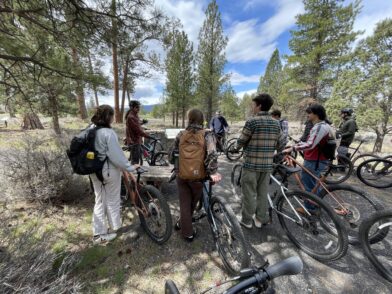
Situated in the northwest pocket of Deschutes County, Sisters includes varied outdoor recreation options, beautiful scenery, and top tier hiking and mountain biking trails. The city’s thriving downtown is bisected by East Cascade Avenue, which bustles with economic activity and serves as a throughway to Redmond, Bend, and central Oregon. The street is often congested […]
Read More… from Connecting Sisters, Sparking Bicycling Joy

The primary goals of this project were to review and assess the implementation of the 1989 Balboa Park Master Plan and provide recommendations for future plan updates. In the first chapter of this report, we discuss previous planning efforts, including the 1989 Balboa Park Master Plan, City of San Diego General Plan, and the 2021 […]
Read More… from Balboa Park Master Plan Analysis Florida Canyon, Zoo Parking Lot, Arizona Landfill, Morley Field, and Inspiration Point
The Sage Project at San Diego State University (SDSU) was commissioned to develop recommendations pertaining to governance methods utilized for Balboa Park. This comprehensive report addresses what governance model, or models, are the best fit for Balboa Park taking into consideration factors such as size, location, physical features, and the region itself. As part of […]
Read More… from Balboa Park: A Governance Analysis and Recommendation

With the support of the Sage Project and in partnership with the San Diego Urban Sustainability Coalition, student researchers conducted survey research to help construct a Community Benefits Initiative. The purpose of this research was to ascertain the equitable and sustainable development priorities of communities of concern in Southeast San Diego, which itself was broken […]
Read More… from Sustainable Development Priorities for Communities of Concern in Southeast San Diego: Transportation, Parks, Groceries, and Equitable Access to Resources
This report addresses the south and southeast region of San Diego County, particularly District 4, and the San Diego Urban Sustainability Coalition’s goal to better understand the needs of seniors and expand sustainability opportunities within these communities. Students of Dr. Henrike Blumenfeld’s SLHS 580 Communication Processes and Aging course conducted a Life Experience Interview and […]
Read More… from Sustainability for Adults Aged 65+ at the Fourth District Seniors Resource Center