
The National City Brownfields Assessment Project is an initiative by the SDSU Center for Regional Sustainability in collaboration with National City. The client needs include a poster, event flyer, a banner, a revision to the logo’s typography and lock-up, and social media collateral. The Brownfields Assessment Project’s aim is to collaborate with the National City […]
Read More… from Visual System for the Brownfields Assessment Project
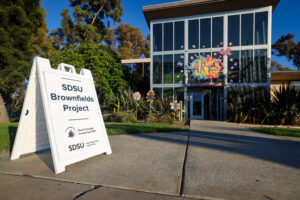
National City’s industrial history has led to an excessive number of brownfields plaguing the community. In an effort to rectify this problem, city officials partnered with the Sage Project on a project funded by the US Environmental Protection Agency (US EPA) and the California Department of Toxic Substances Control (DTSC). One goal of the project […]
Read More… from National City Brownfields: Resident Thoughts on Community Improvements
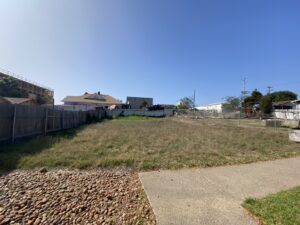
The SDSU Brownfields Assessment Project at San Diego State University (SDSU) aims to support revitalization of the National City downtown area and meet community needs by designing alternative land uses for brownfields in the community, and this report focuses on solutions for one site at 1028 A Avenue in National City, CA. The goals of […]
Read More… from National City Brownfields Revitalization

At the end of February, our studio met with clients Khea Pollard (Jewish Family Service) and Jessica Barlow (the Sage Project) to discuss the upcoming program, Black Women’s Resilience Project (BWRP). BWRP is a new initiative that supports low-income Black women in San Diego, primarily through guaranteed income and other community-based resources. In the hopes […]
Read More… from Graphic Design Studio: Black Women’s Resilience Project
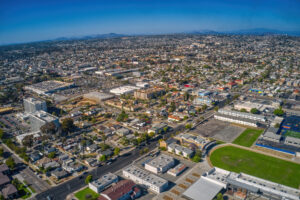
The project reported here represents community partnership work between the city of National City and San Diego State University (SDSU) students. Operating under the university’s Center for Regional Sustainability with grants from the US Environmental Protection Agency (EPA) and the California Department of Toxic Substance Control (DTSC), the SDSU Brownfields Project intends to identify and […]
Read More… from National City Comprehensive Brownfields Reuse Plan

In collaboration with the San Diego State University Sage Project, undergraduate student researchers contributed to the Black Women’s Resilience Project (BWRP) by conducting a qualitative research study in their Politics of Health Communication course (COMM 422). The goal of this study was to identify the connections between the guaranteed income (GI) initiative and health among […]
Read More… from Using a Culture-Centered Approach to Explore the Potential Impacts of Guaranteed Income on Black Women’s Health in San Diego
Khea Pollard, CEO of Cafe X: as well as the creative mastermind for the Black Women’s Resilience Project has dedicated her career to supporting and advocating for communities of color in her residing city of San Diego. Cafe X serves as a hub and according to Khea: “It’s more than just coffee, it’s a movement […]
Read More… from Black Women’s Resilience Project supported by Jewish Family Services: Sustainable Business Consulting Report

According to Moslimani et al. (2024), underpinned by the US Census microdata from 2022, the Black population of the US is growing, from 36.2 million self-identified Black people in 2000 to an estimated 47.9 million people in 2022; this is an increase of 32% in two decades, making up 14.4% of the country’s current population. […]
Read More… from Empowering Black Women in San Diego

With support from the Sage Project at San Diego State University and in collaboration with the Black Women’s Resilience Project (BWRP) and Jewish Family Service of San Diego (JFSSD), student researchers created a community needs assessment to collect information about the struggles of single Black mothers who live in the health equity zip codes established […]
Read More… from Socioeconomic Struggles and Opportunities with Guaranteed Income: Community Engagement, Self-Actualization, Healthcare, and Economic Mobility

In collaboration with the Jewish Family Service of San Diego (JFSSD) and under the guidance of the Sage Project, student researchers at San Diego State University collected existing data to aid the launch of the Black Women’s Resilience Project (BWRP)—a new initiative being launched by the JFSSD to support Black women living in San Diego. […]
Read More… from “Social Determinants of Health and Their Impact on Black Women in San Diego County: The Social, Economic, and Environmental Factors that Shape Health Outcomes”