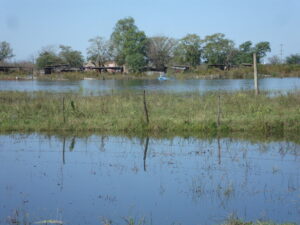
The Mapuche Community of Campo La Cruz was settled on the outskirts of Junín, Buenos Aires, Argentina, following a process of colonization and conquest during the 19th century. Located on the temperate plains of the humid pampas, its ecosystem consists of grasslands and prairies, although the expansion of agriculture and the city replaced much of […]
Read More… from Sustainable management of natural environments of a Mapuche community in the city of Junín, Buenos Aires: environmental impacts and risks in the face of climate change
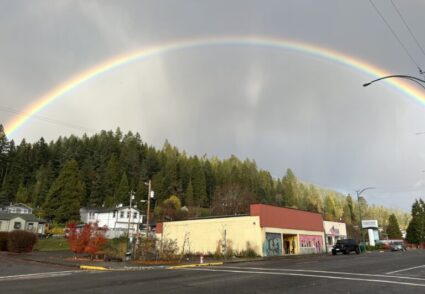
AbstractWith the goal of introducing new housing types into a city primarily comprised of single-family dwellings, architecture students designed middle-density housing for the City of Oakridge. The course explored various dwelling typologies that fall under middle-density housing and looked at multiple strategies to integrate new dwelling types into established Oakridge neighborhoods. Students outlined their design […]
Read More… from Introducing Middle Housing in the City of Oakridge

AbstractThe Marketing Management class undertook detailed analyses of four businesses integral to Oakridge’s identity: Trans Cascadia Excursions, Mill Pond Station, The Campfire (Cowgirl Cook’n), and Brock’s Wood Lot. Each project examined these businesses’ unique challenges and opportunities, culminating in tailored marketing strategies and operational insights to help them thrive in their respective markets. This report […]
Read More… from A Marketing Blueprint to Enhance Local Businesses in Oakridge
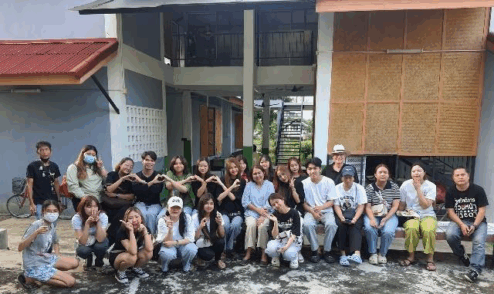
The Puey Ungphakorn School of Development Studies (PSDS) at Thammasat University is partnering with Rangsit City Municipality, Baan Poonsuk Shelter, and the National Housing Authority to address homelessness and improve the quality of life for vulnerable residents. The community-identified need focuses on food security, mental health support, and livelihood development for unhoused populations. University assets […]
Read More… from Creating an Ecosystem of Support for the Unhoused in Rangsit City Municipality
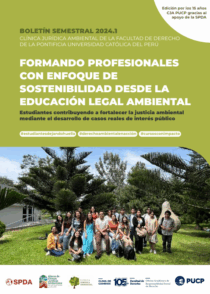
En este primer semestre del 2024, la Clínica Jurídica Ambiental de la PUCP ha reafirmado su compromiso con la educación legal ambiental y la defensa de la justicia ambiental en el Perú. A través del análisis y desarrollo de casos reales, los estudiantes han puesto en práctica estrategias jurídicas para la protección del medio ambiente, […]
Read More… from Boletín 2024.1
Durante el año 2023, la Clínica Jurídica Ambiental de la PUCP consolidó su compromiso con la educación legal ambiental y la defensa del derecho a un medio ambiente saludable. A través del trabajo interdisciplinario de estudiantes, docentes y voluntarios, se abordaron diversas problemáticas ambientales de relevancia nacional e internacional, impulsando el acceso a la justicia […]
Read More… from Boletín Anual 2023

La metodología de EPIC-N para el desarrollo de proyectos de vinculación en el marco de la colaboración CUCEA-Gobierno de Zapopan se ha convertido en un elemento de gran relevancia para la formación y retribución social de estudiantes en el Doctorado en Políticas Públicas y Desarrollo. Por lo anterior, la presente propuesta pretende continuar con la […]
Read More… from Política de cuidados del municipio de Zapopan, Jalisco

This project aims to examine labor market disparities affecting vulnerable populations—women, youth, migrants, LGBT individuals, people with disabilities, and ethnic minorities—in the Metropolitan Area of Bucaramanga (AMB). By employing a quantitative approach, the research seeks to identify labor market gaps, understand the underlying determinants, and propose policy interventions to enhance inclusion. The study focuses on […]
Read More… from Labor Market Analysis and Vulnerable Groups: A Systemic Approach in the Metropolitan Area of Bucaramanga

Over the past 15 years, the Environmental Law Clinic at the Pontifical Catholic University of Peru (PUCP) has become a model of experiential legal education that defends environmental rights in Peru and abroad. Founded in 2009, the Clinic has addressed complex environmental challenges at the local, national, and international levels. Its location, in a country […]
Read More… from PUCP’s Environmental Law Clinic
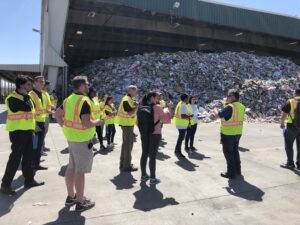
As a city of over 500,000 residents, the City of Mesa is dedicated to fostering a safe and sustainable future for all by offering high quality services from all municipal departments, including the Solid Waste Department and Energy Resources Department. Both departments interface frequently with Mesa citizens via a variety of communication media to advance […]
Read More… from Recycle Right & Natural Gas Safety Messaging Evaluation