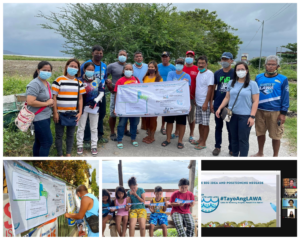
The project titled “Enhancing Disaster Preparedness of Lakeshore Communities in Calamba City, Laguna, Philippines” is a collaborative initiative between the University of the Philippines Los Baños (UPLB) and the City Government of Calamba, implemented under the EPIC-N framework. It was conceptualized to address the urgent needs of ten lakeshore barangays in Calamba that are highly susceptible to flooding due to their proximity to Laguna Lake. These communities face chronic challenges related to poor solid waste management, health and sanitation issues, and inadequate disaster preparedness—conditions that were further exacerbated by the COVID-19 pandemic.
To directly respond to these local vulnerabilities, the project aligned its objectives with key global targets, specifically Sustainable Development Goal (SDG) 3 (Good Health and Well-being), SDG 6 (Clean Water and Sanitation), and SDG 13 (Climate Action). Prior to project implementation, partnerships were established with various academic units within UPLB, including three graduate-level courses: DEVC 208 (Communication Approaches in Development Programs) from the College of Development Communication, and DM 201 (Development Perspective) and DM 223 (Project Development Management) from the College of Public Affairs and Development. Faculty members supervised students as they applied academic knowledge to address community-based development issues.
The project also involved collaboration with critical offices of the City Government of Calamba, namely the City Agricultural Services Department (CASD), City Environment and Natural Resources Office (CENRO), City Planning and Development Office (CPDO), City Disaster Risk Reduction and Management Office (CDRRMO), and the City Information, Investment Promotions, and Employment Services Office (IIPESO). Barangay officials, the Bantay Lawa Volunteers, and the Fishery and Aquatic Resources Management Council (FARMC) were also vital community partners, providing on-the-ground insights and local support.
The project had two primary components. The first focused on crafting and implementing an Information and Education Campaign (IEC) on sanitation and waste management during flooding in the pandemic context. Graduate students from DEVC 208 conducted situation and audience analyses, designed culturally relevant IEC materials (tarpaulins, calendars, and leaflets), and worked closely with barangays to ensure effective dissemination. Materials were distributed in print and shared through the city’s social media platforms and local radio, helping to broaden awareness, particularly among youth and household leaders. Post-distribution focus group discussions confirmed increased knowledge and behavioral change in solid waste management, reinforcing the project’s alignment with SDGs 3 and 6.
The second component aimed to enhance disaster preparedness by revisiting the existing Barangay Disaster Risk Reduction and Management Plans (BDRRMPs). Graduate students from DM 201 and DM 223 assessed the plans using development and project planning frameworks, identifying gaps, and proposing practical, data-informed improvements. These assessments and recommendations were submitted to barangay and city officials and are now being considered in the revision of both local and city-wide disaster preparedness plans—contributing directly to SDG 13 (Climate Action).
Ultimately, the project fostered a model of community-engaged scholarship and intersectoral collaboration. It demonstrated how universities can leverage academic resources to empower vulnerable communities, strengthen local governance, and advance sustainable development goals. Moving forward, the project partners are committed to ensuring the continuity of its gains through expanded partnerships with schools, ongoing LGU engagement, training sessions, and support for localized policy development—promoting long-term resilience and sustainability in Calamba’s lakeshore communities.
Site Search:
Enhancing Disaster Preparedness of Lakeshore Communities in Calamba City, Laguna, Philippines
Dr. Maria Ana T. Quimbo
Metrics
- University University of the Philippines Los Baños
- Sustainable Development Goals 03 Good Health and Well-Being, 06 Clean Water and Sanitation, 13 Climate Action
- Population Type Residents
- University Department Public Affairs
- Lead Local Gov / Community Partner Org Name City of Calamba