Afyon Kocatepe University
Metrics
Community
CityCommunity Size
260,577University
Afyon Kocatepe UniversityYears
2025Status
Active Member ProgramCase Type
Program StoriesRegion
Asia, GlobalSustainable Development Goals
11 Sustainable Cities and Communities, 12 Responsible Consumption and Production, 4 Quality EducationWebsite: https://www.aku.edu.tr
Afyon Kocatepe University (AKÜ) is a public university in Afyonkarahisar, on the inner Aegean plateau of western Türkiye. It was founded on July 3, 1992 and takes its name from the ridge from which the decisive campaign of the Turkish War of Independence was directed. Around 30,000 students are enrolled across its faculties, graduate institutes, and fourteen vocational schools, distributed over three campuses in and around the provincial capital.
The province the university sits in is shaped by two opposing pressures. Afyonkarahisar is one of the world’s most significant natural stone regions, and marble quarrying and processing account for a substantial share of provincial employment while generating large volumes of solid and slurry waste. At the same time, the province is losing water at a pace that has become difficult to absorb. Eber Lake in Bolvadin district has recorded losses reported at up to ninety percent, and the Pınarbaşı pond in Emirdağ dried out completely in 2026. Because sawing and polishing stone are water-intensive, the two activities that drive the provincial economy draw on the same declining resource. AKÜ has organized itself around these conditions through a Sustainability Coordination Office and a rectorate-level Sustainability Commission, and it works in continuing contact with the municipal and provincial authorities that hold regulatory responsibility for waste and water. The university was introduced to the EPIC Model in December 2025 through EPIC-Asia.
Fun Facts about AKÜ
Year EPIC Program Established | 2025
Country | Turkey
City Partners
2026 | Afyonkarahisar • Population: ~260,577
Sustainability Coordination Office
Website: https://sustainability.aku.edu.tr/
The Sustainability Coordination Office directs the university’s institutional sustainability agenda. This includes the “Green Campus” strategy, alignment with the UN Sustainable Development Goals, and the university’s annual submissions to the UI GreenMetric World University Rankings, which assess institutions on setting and infrastructure, energy and climate change, waste, water, transportation, and education.
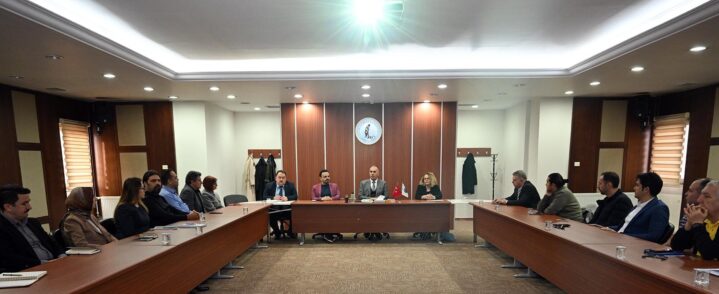
The Office is led by Sustainability Coordinator Prof. Dr. Emine Hesna Kandır, a veterinary scientist in the Department of Wild Animal Diseases and Ecology in the Faculty of Veterinary Medicine. Deputy coordinators include Dr. Pelin Sertyeşilışık of the Afyon Vocational School and Dr. Fatih Özdinç. The university’s Sustainability Commission held its first meeting on December 1, 2025, chaired by Vice Rector Prof. Dr. Şuayıp Özdemir, with Secretary General Hasan Düzgün, the deputy coordinators, and commission members present. Dr. Nuttavikhom Phanthuwongpakdee of Thammasat University, who coordinates EPIC-Asia, presented on how institutions elsewhere have approached implementation of the global goals.
The Office’s work reaches well beyond campus reporting. Its coordinators run public programming together with the Afyonkarahisar Provincial Directorate of the Ministry of Environment, Urbanization and Climate Change, the Afyonkarahisar Municipality’s Climate Change and Zero Waste Directorate, and the Provincial Directorate of National Education, and they have represented the university at the Zero Waste Forum in Istanbul. Coordination staff also publish on AKÜ’s own sustainability performance, including a 2026 assessment of sustainable development at the university that appeared in Springer’s World Sustainability Series.
Afyon Vocational School
Website: https://afyonmyo.aku.edu.tr
The Afyon Vocational School (Afyon Meslek Yüksekokulu) connects AKÜ to many parts of the provincial economy. Its two-year associate degrees prepare students for practical work across technical fields, culinary arts, and hotel management, reflecting the range of skills needed in Afyonkarahisar’s industries and services. Graduates go on to work in settings ranging from quarries, cutting plants, and energy installations to kitchens and hotels. Across these workplaces, everyday decisions about how materials are used, water is consumed, and waste is handled give students opportunities to put sustainability into practice.
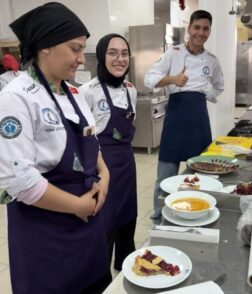
Its facilities include workshops in natural building stones, construction, architectural restoration, machining, rail systems, interior design, and ceramics and glass. The Construction Department houses the Marble Technology and Construction Technology programs, and other offerings include Alternative Energy Sources Technology, Hybrid and Electric Vehicle Technology, Architectural Restoration, Food Technology, and Local Governments.
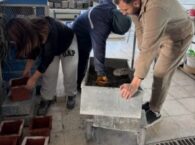
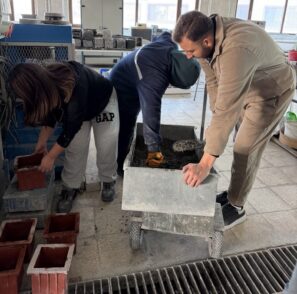
Practices at the School bear directly on the EPIC Model. Students in the marble programs fabricate design and art objects from quarry and processing waste, turning a disposal stream into studio material and building a habit of looking for uses among students who will hold operational positions in the sector within a few years of graduating. Separately, the School’s required English courses have been rebuilt around climate and environmental content, covering drought, water accounting, waste recovery, and circular economy terminology, which puts environmental literacy and access to international standards documentation inside a mandatory course rather than in the optional programming that tends to reach only students who were already interested.
Contact Info
Dr. Pelin Sertyesilisik
Deputy Sustainability Coordinator, Afyon Kocatepe University
Construction Department, Afyon Vocational School

psertyesilisik@aku.edu.tr