EPIC-Africa Program Interviews | Slum Dwellers International
By: Jonathan Kroeze
During the EPIC-Africa Learning Event at the University of Pretoria in February 2025, EPIC-N facilitated a number of interviews with our members to highlight their experience implementing the EPIC Model, along with their successes, challenges, and lessons learned. You can read the first interview here and the second interview here. Our third interview is with Evans Banana from the Dialogue on Shelter for the Urban Poor and Slum Dwellers International (SDI). Read Evans’ interview below:
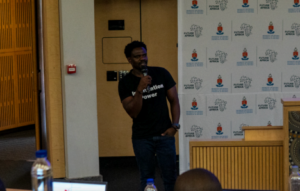
Evans Banana, Dialogue on Shelter for the Urban Poor / SDI (Slum Dwellers International)
Intro:
My name is Evans Banana. I work with an organization called Dialogue on Shelter for the Urban Poor, which is an SDI (Slum Dwellers International) affiliate based in Harare, Zimbabwe. I’ve been working with Dialogue on Shelter since 2007.
Dialogue on Shelter is involved in a number of urban development projects, mainly focusing on how we can end urban poverty through participatory means, working with organized communities.
In terms of my involvement with EPIC, it began when we partnered with Chinhoyi University of Technology through Dr. Murisa. We asked for assistance in documenting the impact of climate change in informal settlements, which is where Dialogue on Shelter and other SDI affiliates concentrate most of our work.
Naturally, we started having conversations from there. That’s when we realized there were many opportunities to collaborate with EPIC and perhaps amplify the findings we were getting. This collaboration ensures that students from Chinhoyi University of Technology also get access to informal settlements, and the informal settlements themselves are empowered by the students’ involvement. This helps communities understand some of the models, theories, and new approaches to engagement whenever they want to interact with local authorities, decision-makers, and policymakers. The involvement of students enhances and strengthens these messages.
Q: So most of your work deals with settlements, correct? [Nods yes] And you mentioned climate change and ending poverty. Is there something specific [related to climate change/poverty] that you could touch on that you think EPIC could help address in your community?
A: Yeah, I think the whole idea behind organizations like SDI and Dialogue on Shelter is that there’s something wrong with our urban development metrics and how governance and development are currently being delivered.
Our SDI models focus on slum upgrading. It’s not that we favor slums—quite the opposite. Slums are a reality in urban centers, and unless we take decisive action, we’ll continue to rely on default measures like demolitions and evictions. Before we know it, slums will become an even bigger concern.
So we are trying to convince all stakeholders that we need to comprehensively and viably address the issues of informal settlements. In Zimbabwe, we have several slum-upgrading projects underway. These projects specifically target slum dwellers, mobilize them, collaborate with local authorities, and work to deliver basic services and enhance tenure security. Tenure security is the key ingredient when it comes to building the resilience of these informal settlements.
In terms of climate change, we realize that even as we address tenure, housing, and basic infrastructure, the climate emergency is another pressing reality. Informal settlements are disproportionately affected by the impacts of climate change. Specifically, we’ve begun taking deliberate and intentional steps to understand these impacts through what we’re calling participatory climate change vulnerability and impact assessments. This is where Chinhoyi University of Technology, through Professor Chipo, is helping us better understand the issues by bringing academia into the conversation.
The goal is to package all the findings, determine vulnerabilities, identify gaps, and co-create climate action plans with the affected communities.
Q: So what we’ve touched on a lot yesterday in this event is hearing from some successful projects and longer-standing members. Is there anything specific that you heard yesterday that you think is a good lesson for you to learn going forward, working with the EPIC model?
A: Yeah, definitely. I think coming from our background, we’ve always wondered where the research done by academia and students ends up. I think the EPIC project is trying to bridge that gap between research and the community, making sure the research ultimately benefits the affected communities. It stops being extractive and instead brings new knowledge into those communities.
What I also picked up yesterday is that these research studies aren’t done in isolation. There’s an element of co-creation and shared knowledge production. So, the involvement of communities in research—what others call community knowledge—ensures that such knowledge isn’t just seen as a resource but as a building block for generating solutions. This is something we, from the SDI and community perspective, really welcome. We’ve already started tapping into it, so the involvement of academia—especially students working on their master’s or PhDs—can inform the research. This ensures that learning, sharing, and empowering communities are embedded throughout the process.
Final Remarks:
Yeah, I think one thing I’ve taken away is that EPIC should place a stronger emphasis on forging collaborative reforms. There are many stakeholders working in the same space as EPIC, and we need to collaborate more strategically to build on the capacities of these organizations.
From the presentations yesterday, it seems there’s limited momentum around organizational collaboration. In Zimbabwe, there are many organizations, and our interaction and partnership
with EPIC have the potential to be much stronger. I think more needs to be done on both sides to strengthen that collaboration.
There’s definitely room for improvement, and we need to be more intentional about it. If other organizations are stronger on the community side, there’s a real need to partner with them to help build the capacity of communities. This ensures we create the soft infrastructure needed to anchor projects even beyond their formal lifespan. Projects may be temporary, but the communities remain.
Written by: Jonathan Kroeze
Edited by: Ada Inman