EPIC-Africa Program Interviews | University of Liberia
By: Jonathan Kroeze
During the EPIC-Africa Learning Event at the University of Pretoria in February 2025, EPIC-N facilitated a number of interviews with our members to highlight their experience implementing the EPIC Model, along with their successes, challenges, and lessons learned. You can read the first interview here. Our second interview is with Anthony Tengbeh, Chairman and head of the Department of Environmental Science at University of Liberia; and Lewis Aldo, lecturer and coordinator for environmental studies and climate change, University of Liberia. Read their interviews below:
Anthony Tengbeh, Chairman and head of the Department of Environmental Science at University of Liberia
&
Lewis Aldo, Lecturer and Coordinator for Environmental Studies and Climate Change, University of Liberia
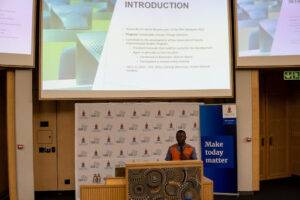
Intro(Anthony): My name is Anthony Tengbeh, and I am the chairman and head of the Department of Environmental Science at the University of Liberia, as well as a lecturer. I’ve been with EPIC since 2024. Of course, I was introduced to EPIC by Lewis Aldo, and since joining EPIC, I’ve seen the impact of EPIC in the communities.
Of course, EPIC has been able to implement projects like the ones we’re discussing in Broadview City, Liberia. Broadview is one of the cities in Montserrado County. The project has been all about waste management. Waste, of course, has been one of our key problems, and so the EPIC model, using the EPIC model, has been able to bring the communities together with the university and the city council as well. Jointly, these three groups have been able to implement such projects.
Today, a lot of people from the communities have gained knowledge in terms of waste management. Proudly, because of EPIC’s involvement, most of those people had little to no knowledge of waste management before. But because of the university providing the knowledge using the EPIC model, the community people and the city council grasped the concept, and now they are running with the idea.
All we do now is to extend our tentacles, extend those projects to other cities across Liberia.
(Lewis): Okay, my name is Lewis Aldo, from the University of Liberia. I am the coordinator for a school program for environmental studies and climate change. I came to the EPIC network in 2023. I’ve been on the EPIC network since the first project, from the proposal stage, and I’ve been a researcher on the project. It means that I look at the EPIC model and do research on it to see how we can form synergy between the local government, the academia, and the communities.
Q: How do you think the EPIC model could contribute to future projects in different areas of focus[besides waste management] in Liberia?
A(Anthony): The EPIC model can contribute to future projects in Liberia through collaboration—collaborative efforts between the communities, the city council, and the universities.
Now, because the universities have the advantage of having the knowledge, they have the ability to do the research, identify the actual problem, and recommend solutions to those problems. So in the future, other projects can be carried out using the EPIC model by bringing these different groups of people together, sitting together, and jointly finding the problem and jointly implementing the projects.
From that point, I think it would be good to look at the Liberia National Budget level. When the national budget is crafted, it goes to the county level and then to the community level to see what the community needs. So EPIC can also help prioritize and set projects for the government because the government listens to the community. If EPIC can partner with the government and the local government, they can implement projects for the local government.
Q: Asking from your[Lewis] point of view, since you’ve been with EPIC a little bit longer, what’s the most important lesson you’ve learned from using the model, and how have you applied it to other areas of your life outside of this?
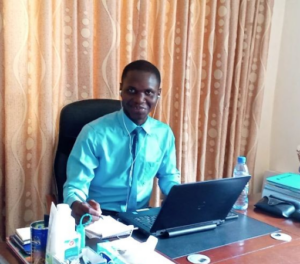
A(Lewis): One thing I’ve learned is that the solution comes from the people involved. So it means that people within the community are the ones who drive the bottom-to-top approach. In the past, we were just in academia. We looked at the problem from the academic level and then tried to form solutions without knowing the community’s perspective. Now, we go down to the community first and find solutions from there. So I’m seeing that in other aspects of my life, I should also, if I do research, look at the community level and see how it can benefit the community and find solutions to it.
Q: Using the model going forward, what are some challenges you anticipate, and how do you plan to overcome those challenges?
A(Lewis): Well, the challenges of using the model are, first, getting it accepted by the community. We find it very difficult to convince them to accept the model because it’s kind of new to many people. But when they understand the essence of the model, they try to follow along. So we use our advantage as universities to educate the people. As long as they get the education on how the model works and what impacts the model has had in the lives of people, using stories from other countries—like we listened to stories from Thailand, Zimbabwe, and Uganda—we can translate that knowledge to the communities in Liberia. When they capture that concept, it’s going to be very easy for us to move forward.
Final remark(Anthony): I think we need more awareness within academia, especially at the university. For example, we found it a challenge to revisit the policy because we found that the environmental science department alone couldn’t do it. We needed someone from the law school. So it was difficult to get them involved. We couldn’t interpret or create policies without them, but we were successful by talking to them, involving them, and then we were able to change some aspects of the policy within the waste management framework. So just combining different actors within your school and different professionals—people who can jointly craft policies and interpret them—is important. We even need to get politicians involved because the legislature approves those laws when they are made.
Another thing, like we were saying earlier, is that those championing the cause for expanding the EPIC model may need some level of incentive as motivation. In Africa, we have volunteers working, but maybe the incentive for volunteers may not be enough to the extent that they will keep making sacrifices. There must be some level of incentive that will also help them to expand the project. Like I said earlier, we are also willing to jointly develop revenue-generating programs so that the burden is not rested on one side. We can all bring out different ideas on how funds can be generated to sustain this EPIC model. I feel that I’ve been successful. I’m happy about that. I introduced the program to others, and they accepted it. I remember on Sunday, we had guests coming from EPIC Uganda, Zimbabwe, and Sam, and I introduced them to the program. They asked if there was any funding, and I said no, we are just on a volunteer basis. So I’m so grateful for that. I’ve been telling other professors so that they can be involved. Yeah, and then it turns into a web because they can use this to involve other people as well. The conference has been very good because it gives us some level of experience from others. If Thailand can succeed, we can use the Thailand experience and draft ours. If Zimbabwe can succeed, we can use the Zimbabwe experience and draft ours. So those different stories are very important.
Written by: Jonathan Kroeze
Edited by: Ada Inman