EPIC-N Attends the 2024 SRI Africa Satellite Event
A host of EPIC-Africa project partners headed to Durban, South Africa to attend the Sustainability Research and Innovation (SRI) Conference African Satellite event from May 21-24, 2024. The conference was partly sponsored by the South African National Research Foundation and focused on various sustainability initiatives throughout Africa. The EPIC partners attended sessions focusing on climate justice, green transitions for the Global South, energy transition for sustainable development, and much more.
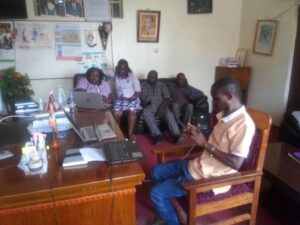
The EPIC partners kicked off the conference on May 21, 2024, where Sean O’Donoghue gave the keynote presentation on climate justice, including how innovative approaches like EPIC help transform the local government landscape in Durban, putting disadvantaged and vulnerable communities at the center of solutions. Andrew Were of Mbale City, a dedicated EPIC partner since 2020, in the first post-plenary session moderated a discussion on the “Transition from Unsustainable to Sustainable Clean Energy Alternatives for Slum Settlements of Mbale City-Uganda”.These actions related to an EPIC project he and many members of Mbale City Council and Makerere University have been working on for quite some time. The project evaluated the unsustainable energy options slum dwellers use in Mbale City and provided a range of alternative energy solutions derived from traditional methods of waste reuse and recycling. The project specifically produced a waste management handbook and a situational analysis report. Many of the sustainable solutions involved the use of animal waste as sources of energy along with legal, policy, and institutional implementation framework enabling the transition to green energy. This panel had collaborations from members of Makerere University, the Chairperson of the Slum Dwellers Federation, members from the Mbale City Community Development Office, the Mbale City Mayor, the Mbale City Town Clerk, student researchers, and a representative from the UN Habitat Global Solutions Branch.
In the session, the Mbale City Mayor acknowledged the “lack of capacity” to manage waste in the slum/city and credited the work of the EPIC project partners for finding sustainable and adaptable solutions that will help manage waste and provide a better living space for slum dwellers. The mayor noted the waste management handbook and situational analysis reports created from the project are “(…) significant as we (Mbale City) seek a framework to involve multiple stakeholders to aid in the sustainable management of wastes in slum settlements in Mbale City.” The Mbale City Town Clerk added that “This congress… (provides) much desired alternatives for sustainable waste management in Mbale slum settlements”. The Mbale session showed the importance of the work EPIC partners are doing across Africa. In the future, Dr. Were hopes to “Work within policy and institutionalize the (EPIC) framework to make the EPIC partnership inter- and transdisciplinary to solve as many problems as possible!” You can read more about this EPIC story here.
Post lunch, the EPIC Durban team presented on how the EPIC model has been used in Durban, South Africa. In this session, EPIC champions Sean O’Donoghue, Smiso Bhengu, and Catherine Sutherland led a roundtable discussion about their EPIC work within the Quarry Road West Informal Settlement. Durban has been implementing the EPIC Model since 2018 within the settlement, having developed a disaster response plan specifically for informal settlements in the City along with risk mapping and documentation of adaptation responses of the community. This project has already seen great success as no community member lost their life due to the early warning flooding system after a major flooding event in April 2022.
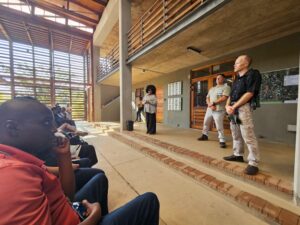
This session was also attended by members of the Quarry Road Settlement who added their personal experience using the disaster response plan measures. One member recounted how the relationship between the community settlements and the city had begun to deteriorate because many settlement members did not trust city officials after their homes were destroyed by dangerous floods which have become more frequent due to climate change. However, when the University of KwaZulu-Natal (UKZN) and EPIC-Network became involved, the members felt open to discussing their challenges with students and professors rather than city officials. The community member noted “The municipality did not know anything about us. When the University came to us for research then we began to open our doors because these were students and not officials.” Due to the community’s willingness to open up, the University was able to gather data about problems within the settlement and collaborate with the City to find new solutions. This EPIC partnership helped repair the relationship between city and settlement through university research and created a lasting safety system that has been used to save lives. This session was supported by the Resilience Rising exhibit, which was recreated for SRI 2024 showing a visual account of community members recovering from the flooding of April 2022. You can read more about this EPIC story here.
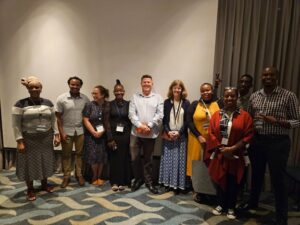
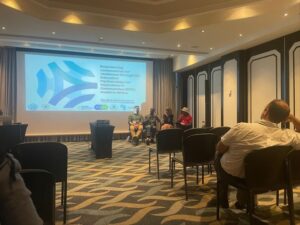
The second day of the conference was met with more EPIC presentations! The EPIC Africa team led a third session on Wednesday, May 22 speaking about the EPIC model as a whole and highlighting the more recent EPIC projects taking place throughout Africa. This session was moderated by Mzime Murisa with many speakers including Hilary Masundire from the University of Botswana, Godffrey Nato from the Technical University of Mombasa, Catherine Sutherland from UKZN, Gavin Luter from the University of Madison-Wisconsin, and Andrew Were from Makerere University. Gavin Luter gave a quick overview of the EPIC Model and discussed the various connections made through the model between universities, communities, and local governments. Mzime Murisa then discussed the history of the EPIC Africa Network summarizing the Lusaka, Nairobi, and Durban pilot projects initiated in 2017 and the growth the Model has seen since then.
Once the introductions commenced, the panelists presented on their current EPIC projects. Hlilary Masundire discussed his work at the University of Botswana working with the Gaborone City Council on solid waste management and wastewater treatment. Botswana is currently struggling with a large water scarcity crisis and uses wastewater in areas that would typically have potable water. Additionally, Gaborone has a solid waste collection issue. To overcome these challenges, the city and university embarked on an EPIC project employing the help of seven undergraduate students. The students analyzed organisms living within the landfill and tested for heavy metals in the leachate dam to understand if groundwater contamination was at risk. This research concluded that the city landfill is well designed, and the leachate dam is not seeping into the groundwater. Masundire noted that “Due to the university’s previous work with EPIC and people seeing that EPIC projects produce results, the City Council has undertaken to provide research funds for more EPIC work in different disciplines. The university Deputy Vice Chancellor for Research has now asked that EPIC work with the Gaborone City Council be highlighted in the University’s Annual Research Report – a very high level recognition, appreciation and acceptance of the EPIC project and the fruitfulness of the EPIC Model” To learn more about this project read about it here.
Godffrey Nato of the Technical University of Mombasa (TUM) presented his current EPIC project working to spread awareness and education of climate change effects through visual arts. As a coastal city, Mombasa has been struggling to deal with the effects of climate change and currently has a large upsurge of waste generation and pollution. To create awareness of this issue TUM has decided to create a visual arts exhibit using graphic design master’s students to produce graphics that highlight the waste problem. The graphic design students spoke to multiple community members about what the waste looks like throughout their homes and communities and had the members draw the waste crisis in their own way. The graphic design students then digitized these drawings and put them on display in an exhibit in Mombasa. The film students also produced a documentary titled “Pointing Fingers” specifically speaking to the waste management issue showing the daily conditions residents deal with and the effects climate change has had on the city. Read more about this story here.
Andrew Gilbert Were of Makerere University spoke again about the EPIC project dealing with waste management in the slum settlements of Mbale City. He discussed the generation of a waste management handbook for the slums and the neighborhood plans showcasing resource availability and socio-cultural values enabling a new neighborhood planning paradigm. These deliverables were achieved by examining the types of waste slum dwellers generate, analyzing the current waste management strategies used by slum dwellers and completing interviews with slum dwellers, city officials, and private waste collectors. Dr. Were notes that the EPIC Model has been instrumental in his waste management project allowing him to bridge the gap between academia, municipality work, and the citizens most affected. Dr. Were says that “Through EPIC, the university, municipality, and city are all three involved in mobilization…and co-write the report ensuring everyone’s involvement. This allows for co-publication and mutual involvement leading to a mutually beneficial relationship…Everyone benefits from this Model, not just professors.” Read more about this project here.
Finally, Catherine Sutherland spoke about the EPIC work being done in Durban, South Africa. In her presentation, Dr. Sutherland provided more context about how EPIC partnerships and projects work within university settings. At Dr. Sutherland’s class at UKZN, students work in a module over ten weeks and work within the EPIC network to expand their learning. Students pick from three different tracks within the EPIC work: ecological infrastructure, informal settlement upgrading, and innovation in water and sanitation. Because students pick their focus area, they have a greater sense of responsibility in producing outcomes that are meaningful and rigorous. Students start by working on one specific problem within the three disciplines and throughout the module begin to connect their work to a bigger stream of work contributing overall to the knowledge of the cities. This allows students to have an appreciation for how their project fits into multiple different disciplines. Dr. Sutherland notes that the EPIC-Network has “…given me a framework to do something I really like in my teaching. I always enjoy having students in the field and engaging in the city and the EPIC model allows me to support the state and still be an academic all at the same time.”
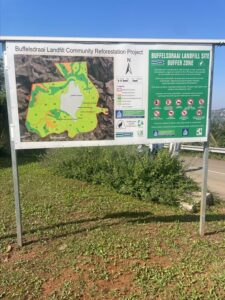
Day three of SRI 2024 featured a site visit to the Buffelsdraai Landfill Site Community Reforestation Project where community members have planted and grown a 500 hectare indigenous forest after collecting seeds, growing to seedlings and trading back with the project. These growers are called treepreneurs, and they are an example of transformative adaptation in Durban. The final day of SRI 2024 featured a plenary by UKZN where Sean O’Donoghue related Durban’s experience within the Durban Research Action Partnership, pursuing innovative approaches that have included EPIC. Overall, the EPIC-Africa team had an impactful experience attending the SRI Conference in Durban, South Africa. Not only did the team present on their EPIC work, but they also attended many sessions dealing with sustainability in Africa. These presentations and sessions will help continue to build on the work already done by the EPIC-Africa team and help grow the EPIC-Africa network to reach more communities and more universities. The EPIC-Africa team hopes to continue to build sustainability initiatives throughout Africa and create even more partnerships spanning across the continent to complete meaningful and results driven progress continent-wide.