UNEP Releases Outcome Assessment Report on EPIC-N
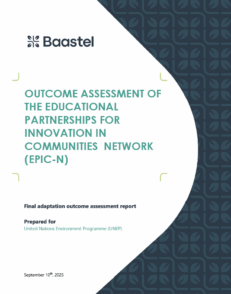
From February to June 2025, The United Nations Environment Programme (UNEP) commissioned an outcome assessment to examine the extent to which adaptation outcomes have been achieved through its support of EPIC-N, with a specific focus on UNEP-supported EPIC-N initiatives across Africa, Asia, and Latin America and the Caribbean.
The EPIC-N model is advanced through an inclusive, multi-stakeholder collaborative approach, creating a space that fosters synergies among universities, municipalities, and communities by bringing all stakeholders to co-develop locally grounded, science-based solutions to specific needs.
– UNEP Report
The methodology combined qualitative and quantitative data collection across multiple levels. In total, over 100 stakeholders were consulted during three regional visits in four countries (Vietnam, Thailand, Mexico, and South Africa), as well as interviews with EPIC-N leadership, regional coordinators, students, faculty, and local government representatives; some of these were through focus group discussions (FGDs) while others were through group or individual interviews. A stakeholder survey was also administered to city–university pairs, and relevant documentation, including project reports, training materials, and strategic guidance, was reviewed. The assessment additionally compiled and analysed a provisional database of UNEP-supported EPIC projects in the three regions to classify their adaptation relevance and implementation status.
The assessment is structured around five overarching questions agreed in consultations with UNEP:
- What key adaptation outcomes have resulted from EPIC-N implementation?
- How has the EPIC Model strengthened adaptation knowledge and capacity among municipalities, universities, and students?
- What financial mechanisms and strategies are required to ensure EPIC’s long-term sustainability for adaptation?
- What best practices and lessons have emerged from UNEP’s support to EPIC? How could these be replicated or scaled up?
- How can UNEP enhance its support to expand the EPIC model for broader adaptation impact?
Interviewees emphasized that while UNEP’s financial contributions have been modest in absolute terms, they have often had an outsized impact—unlocking national co-financing, enabling institutional buy-in, and catalysing long-term partnerships.
– UNEP Report
This report is intended to support UNEP’s internal reflection and strategic decision-making regarding future engagement with the EPIC Model. Read or download the full report below.