EPIC Asia Showcases Sustainable Innovations at SRI2024 in Helsinki
Biggest Sustainability Science Event Teams Up with One of the World’s Leading Sustainability Congresses in 2024
Amid the escalating climate crisis and growing social challenges, the need for innovative and collaborative approaches to sustainability has never been more urgent. Recognizing this imperative, the Urban Futures and Policy Research Unit of Thammasat University, as the host of EPIC Asia, proudly participated in the Sustainability Research & Innovation Congress (SRI) 2024 in Helsinki, Finland, from 10 to 14 June 2024. Representing EPIC Asia, Dr. Nuttavikhom Phanthuwongpakdee (Kay), a lecturer at Puey Ungphakorn School of Development Studies at Thammasat University, joined this prestigious event, supported by Future Earth, a global research platform advancing sustainability science.
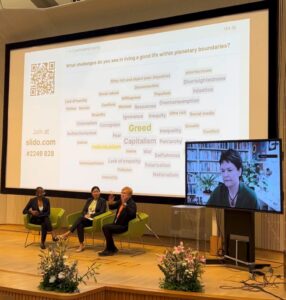
Since 2021, the Sustainability Research & Innovation Congress (SRI) has united global leaders in research, government, civil society, and business to advance progress towards sustainability. The SRI Congress offers an inclusive and inspiring global platform for co-creating state-of-the-art solutions and innovations. SRI is co-convened by Future Earth and the Belmont Forum with local co-organisers.
SRI2024, held in collaboration with Sustainability Science Days (SSD), brought together over 2,000 participants from more than 100 countries, both online and in person, with events at Aalto University in Espoo, the University of Helsinki in Helsinki, and additional events throughout both cities. This year’s plenary speakers included Tarja Halonen, former President of Finland and a notable advocate for sustainability, who emphasized the urgency of immediate action, noting that the urgency of our actions cannot be overstated and we must not leave the burden of sustainability to future generations. Riyong Kim, Head of Sustainability Transitions at the European Environment Agency, also delivered an inspiring keynote.
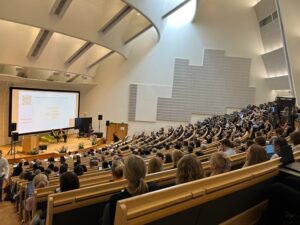
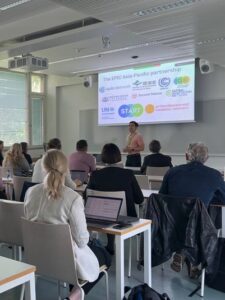
EPIC Asia Session: Cultivating Sustainable Cities and Communities
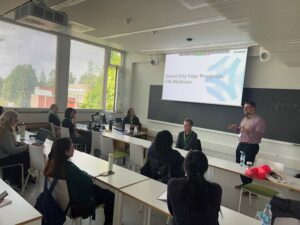
On 11 June 2024, EPIC Asia organized a session titled “Cultivating Sustainable Cities and Communities: Fostering Green Transitions through University-City Collaborations in Asia.” This session explored the Educational Partnerships for Innovation in Communities Network Model (EPIC Model), a framework that promotes collaborative efforts between universities and local communities, emphasizing student engagement in addressing societal challenges.
The session underscored how the EPIC Model facilitates green transitions and supports the achievement of the SDGs in several Asian cities, highlighting the meaningful link between academic institutions and local communities. In this context, green transitioning includes actions like biodiversity preservation, reduction of greenhouse gases, and sustainable resource management. Student involvement is key, offering fresh perspectives and innovative solutions.
Several collaborations exemplified this approach:
- Sudarat Jutimusik, a student from Puey Ungphakorn School of Development Studies: Actively involved in helping Rangsit City Municipality support individuals experiencing homelessness.
- Dr Kanyarat Nimtrakool from Rajamangala University of Technology Tawan-ok: Leading efforts in sustainable logistics development to reduce emissions and improve energy efficiency in Bangkok.
- Dr Catharina Any Sulistyowati from Seni Tani community organization: Partnering stakeholders, including students and lecturers from Universitas Indonesia, to implement sustainable agricultural practices in Bandung, Indonesia.
- Dr Le Thi Xa from Soc Trang Community College: Focusing on climate-resilient farming in Tran De District, Soc Trang Province, Vietnam, in collaboration with An Giang University.
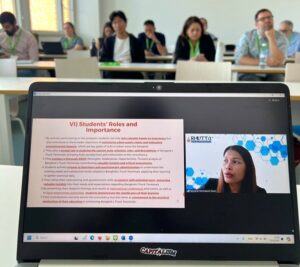
Participants from Mexico, Colombia, Brazil, Canada, the USA, Israel, Indonesia, Vietnam, and Thailand attended the session both in person and online. Additionally, Mzime Murisa, EPIC Africa Coordinator, joining online from Zimbabwe; Joel Rogers, EPIC Chair and a lecturer of law at the University of Wisconsin; Ada Inman, EPIC-N Program Manager, and Gavin Luther, Managing Director of EPIC-N, all contributed significantly to the discussions and efforts, demonstrating the global reach and collaborative spirit of the EPIC-Network.
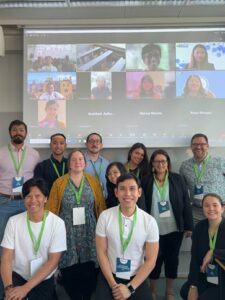
Collaborative Sessions: Living on the Frontlines of Change
On 10 June 2024, EPIC Asia collaborated with EPIC-N (USA) and EPIC-Latin American and the Caribbean (LAC) on a session under the theme “Living on the Frontlines of Change – The Arctic and Beyond.” These sessions addressed the complex challenges facing communities worldwide due to extreme weather events, environmental degradation, and socio-economic pressures.
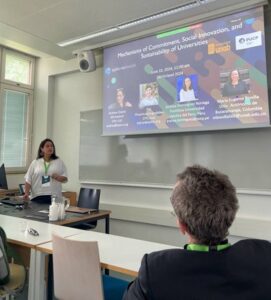
The session, “Mechanisms of Commitment, Social Innovation, and Sustainability of Universities,” featured:
- Andrea Chavez, EPIC-LAC Coordinator
- Maria Eugenia Bonilla Ovallos, Universidad Autonoma de Bucaramanga, Colombia
- Andrea Dominguez Noriega, Pontificia Universidad Católica del Peru
EPIC-N World Café Networking
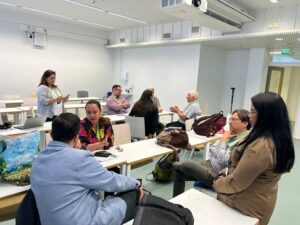
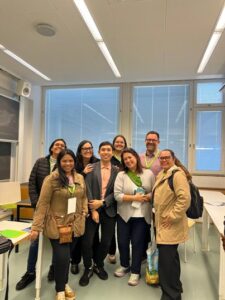
Another engaging session co-organized by EPIC-N from different regions was a World Café Networking event that emphasized the pivotal role of universities in promoting sustainability, fostering vibrant public life, and advancing the global sustainability agenda. This session highlighted the experiences and best practices of university-community partnerships in Latin America and the Caribbean, with notable contributions from Universidad Autónoma Metropolitana and Universidad de Guadalajara, Mexico as well as Universidad Autónoma de Bucaramanga, Colombia. Participants learned how the EPIC model can be a transformative approach to sustainability, connecting universities with local communities to co-create solutions that are both impactful and sustainable. By integrating academic knowledge with community needs, universities can leverage their resources and innovative thinking to address pressing social and environmental challenges effectively.
Conclusion
The participation of EPIC Asia in SRI2024 in Helsinki, Finland, underscored the critical role of university-community collaborations in fostering sustainable development. Through sessions that showcased successful projects and facilitated networking among global sustainability leaders, EPIC Asia demonstrated its unwavering commitment to advancing the SDGs and driving meaningful change in communities across Asia and beyond.
The EPIC model stands as a transformative approach that connects universities with local communities to address real-world challenges, promote sustainable development, and support the achievement of the Sustainable Development Goals (SDGs). The EPIC model empowers communities to adopt holistic and sustainable practices across various sectors by fostering collaboration, innovation, and student engagement.
“The impact of our efforts at SRI2024 is a testament to the power of collaboration,” said Joel Rogers, EPIC Chair. “Our collective work showcases the potential for universities and communities to drive sustainable development and create lasting change. Together, we are building a future where sustainability is at the forefront of every initiative.”
The impactful sessions and robust discussions at SRI2024 have reinforced the EPIC network’s global reach and collaborative spirit, paving the way for continued progress and innovation in sustainability efforts worldwide.