Jane Rogan Joins the EPIC-N Executive Committee

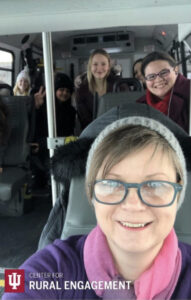
Brown County State Park in Indiana has some of the best hiking and trails around here. And although I’m not into it, the mountain biking in the part is first rate.
If applicable, briefly describe your first interaction with a school-community project and the impact it had on you.
I saw the strength of community/university partnerships with our pilot engagement with Lawrence County. When a student group reported back to their client, a university extension agent working in wellness, she cried. She knew that alone she could have come up with the work the students completed but it would have taken her over a year. The students provided her excellent work, a product she needed, and a process for implementation over the course of several weeks. What we see as ordinary might appear outstanding to somebody else.
How did you first learn about EPIC-N?
I learned about EPIC-N through our university sustainability director who had seen a presentation at an AASHE conference. The idea seemed too good–and too simple–to be true! Why had we not thought of this earlier!
What are some of the top priorities you are working on this year?
Strengthening our community contacts during COVID social distancing–our university still has a travel moratorium in place. Reaching out to former communities to see how we might work with them. Using the UN Sustainable Development Goals to frame and contextualize our work to a larger global framework. Setting up Communities of Practice for EPIC practitioners to discover best practices and novel approaches to support our work.
In what ways are you looking to engage, or work with others, either from within the EPIC-Network or in general?
The Communities of Practice will be a helpful way to connect. So, too, are the monthly EPIC Network calls, I’d love to see more folks be able to dial in to those. I’d also really like to partner with others running predominantly rural programs.
Why do you think the EPIC-Network is important?
The model is simple and adaptable. Practitioners center their work on the community and prioritize community needs. Strong, enduring and sustainable networks are developed and supported. The network makes all of this happen. And it provides a supportive and developmental framework for practitioners.
What is your favorite part of the EPIC-Network?
Learning from program managers about their projects in communities. Hearing how others navigate their partnerships, onboard communities, develop projects, map and measure successes, and plan future engagements.
What do you want a community, or university, to know about the EPIC-Network?
EPIC is EASY. It fits neatly into the university model. It is low cost and high impact. and it works!!
What led you to participate within the EPIC-Network in your current capacity?
I was always asking questions about what the EPIC models could do, should do, ought to do, and how I could better structure our program. Learning more about the network and hosting the conference led me to see the work of the board much more closely and I was excited to get involved.
Bio