Maria Ines Brings EPIC-N to the Cono Sur Region

Favorite Place
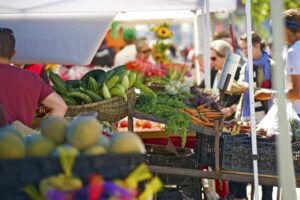
My favorite place is the local fair called “From Producers to Consumers”, which takes place twice a month at the Agronomy Faculty in Buenos Aires city. In this place, you can buy agroecological and healthy fruits and vegetables directly from the producers and ensure that the food comes from a sustainable production system. At the same time, the prices of goods and products are fair because you buy directly from producers without intermediaries. A diversity of quality products is available to everyone that comes to the fair at a cheaper price, so both the producers and consumers win.
If applicable, briefly describe your first interaction with a school-community project and the impact it had on you.
My first interaction with a community took place a long time ago when I was a volunteer at the University of Buenos Aires. I started to work with agroecological producers from Cañuelas, a small city in Buenos Aires Province. During that time, I learned a lot about the challenges of producing sustainable fruits and vegetables and the work of local cooperatives to distribute the food directly to consumers. These challenges were diverse and ranged from the producers´ access to their own land to the lack of climate information to make decisions on the production and harvesting process. As a social scientist interested in how to make climate information useful to producers, it is essential to understand the whole picture and the context in which decisions are made. Therefore, my work aims to co-produce usable knowledge that helps producers make better decisions under changing climate conditions.
What are some of the top priorities you are working on this year?
I’m working on science communication on global environmental change at the Inter-American Institute for global change research (IAI). Therefore, learning how to communicate and translate scientific information into policy and disseminate it to a wider public has become a priority for me. Furthermore, I coordinate a project called Suture the Earth, which intertwines science, art, education, and territory to raise awareness about the most pressing problems of our time such as climate change. Within the project, we produce different materials, an artistic video, paintings, and journalistic articles that connect global concepts to our daily life. All of these materials have been used in graduate and postgraduate seminars in order to explore other ways of teaching and learning that allow students to reflect on these topics through sensitive experiences and connect them to their research topics and local fieldwork. As the materials merge science and art, they have reached many audiences outside the academia, such as social movements and people interested in these topics.
In what ways are you looking to engage, or work with others, either from within the EPIC-Network or in general?
As a social anthropologist, I was trained to work with the people in the field through bottom-up approaches. Throughout my professional career, I have developed interpersonal skills that help me to articulate global problems with local perspectives in order to address sustainability problems. As a transdisciplinary professional, I have learned to engage people in conversations and develop a common language that can bridge the gap between science, politics and society. I would like to broaden my network and exchange knowledge and experiences with people around the globe.
Bio
Dr. Maria Ines Carabajal is a researcher at the University of Buenos Aires, Argentina, and a lecturer in various universities in Argentina. She works as a consultant for local and international projects focusing on climate change and sustainability issues. Dr. Carabajal’s research is related to the human dimensions of climate, climate change, and the Anthropocene. Her work has focused on the production, circulation, and use of climate-related information, and how it is applied to decision-making processes. She has studied how communities, agricultural producers, and stakeholders perceive and experience the effects of climate change and variability, and how they develop resilience and adapt to these changes through the co-production of knowledge. Dr. Carabajal received a PhD in Anthropology from the University of Buenos Aires, Argentina. She has received numerous honors and fellowships, including a Conicet postdoctoral fellowship (2017-2021), IAI-CRN3035 (2013-2017), CLIVAR-WMO (2016), and a UNESCO scholarship Award (2015). She has published articles and contributed chapters to national and international scientific journals and publications.