Kent State University
Metrics
University
Kent State UniversityProgram
Cleveland Urban Design Collaborative (CUDC)Years
1999-PresentStatus
Active Member ProgramCase Type
Program StoriesSchool Size
Greater than 30000Focus Areas
Civic Collaboration, Research, Urban Design, Urban PlanningDiscipline
Architecture, Landscape Architecture, Urban DesignRegion
USASustainable Development Goals
11 Sustainable Cities and Communities, 9 Industry Innovation and InfrastructureCleveland Urban Design Collaborative (CUDC)
Website | https://www.cudc.kent.edu/
LinkedIn | KSU Cleveland Urban Design Collaborative
Instagram | @ksucudc
Facebook | Cleveland Urban Design Collaborative
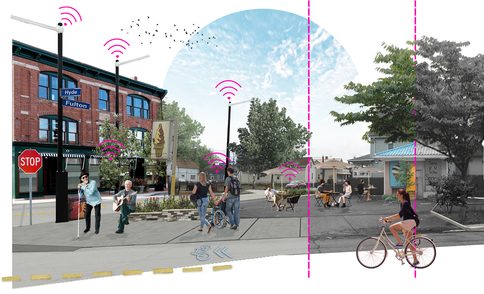
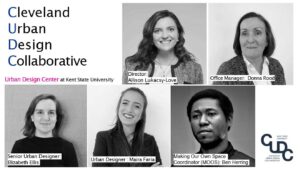
Kent State University’s Cleveland Urban Design Collaborative (CUDC) is a university-based urban design practice and learning lab with more than 40 years of history advancing community-centered design in Northeast Ohio. The program was founded in 1983 as the Urban Design Center of Northeast Ohio through Kent State’s Urban University Program, expanding the College of Architecture and Environmental Design’s public service and community outreach work. In 1999, it established a permanent presence in downtown Cleveland, bringing together professional practice, applied research, education, and community engagement in the city and region. Today, the CUDC is led by Allison Lukacsy-Love, AIA, AICP, and works at the intersection of design, planning, research, and civic collaboration. Its current focus includes equitable and resilient community development, neighborhood and waterfront revitalization, public-space and infrastructure planning, youth design-build through Making Our Own Space (MOOS), and applied research addressing emerging challenges facing Northeast Ohio. The CUDC’s vision is to build on its legacy as a trusted university-based community design center while becoming an even stronger regional hub for innovation, convening, and advocacy—connecting communities, public agencies, universities, designers, and civic partners to develop creative, practical, and equitable solutions for the future of Northeast Ohio and beyond.
The CUDC is an innovative community-based Urban Design Practice and Learning Lab creating sustainable, vibrant, and inclusive urban futures. We combine Design assistance, applied research, education, and advocacy to help communities vision the possibilities of their built environments in Cleveland, Northeast Ohio, and beyond.
Fun Facts About CUDC
The Cleveland Urban Design Collaborative (CUDC) has several distinctive characteristics that set it apart from traditional university research centers and design practices:
A university-based urban design practice in the heart of Cleveland: Founded in 1983, the CUDC has maintained a permanent downtown Cleveland presence since 1999. It operates as both a professional urban design practice and a learning laboratory, connecting Kent State University students and faculty with real-world urban challenges, community partners, and public agencies.
An interdisciplinary, applied learning environment: The CUDC is co-located with Kent State’s graduate programs in Urban Design, Landscape Architecture, and Architecture. Students benefit from direct engagement with practicing designers, planners, public officials, community organizations, and residents. CUDC staff also contribute to graduate studios, design charrettes, and capstone advising.
Community-driven planning, charrettes, and master planning: The CUDC has a longstanding practice of working directly with residents, neighborhood organizations, municipalities, and community stakeholders to envision the future of their communities. Through facilitated public design charrettes, collaborative workshops, neighborhood micro-plans, and comprehensive master planning processes, the CUDC creates opportunities for residents to actively shape the places where they live, work, and gather. These processes translate community priorities into actionable design concepts, illustrative plans, development strategies, and implementation roadmaps. The CUDC works at multiple scales—from a single public space or neighborhood corridor to entire neighborhoods, waterfronts, and citywide redevelopment areas—helping communities move from vision to implementation.
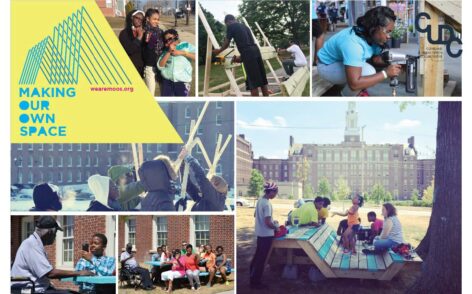
An award-winning youth design-build program: Making Our Own Space (MOOS), established in 2015, engages middle and high school students in designing and physically building improvements to parks, vacant lots, and other neighborhood public spaces. Young people learn to use power tools, develop design and construction skills, work with professional designers, and receive stipends for their contributions. MOOS also works to expand racial and ethnic diversity in architecture, landscape architecture, planning, and related design professions.
National and state recognition: MOOS has received the 2017 Environmental Design Research Association (EDRA) Great Places Award, the 2019 American Planning Association Ohio Chapter Best Practice Award, and the 2020 Ohio Chapter of the American Society of Landscape Architects Special Recognition Award. The program has also received support from the National Endowment for the Arts, including a $30,000 award in 2023.
A growing investment in youth leadership and design careers: Building on MOOS’s decade of success, the CUDC is expanding its youth programming and establishing dedicated program leadership, with support from the Cleveland Foundation. The initiative creates opportunities for students to engage in hands-on design, fabrication, construction, and community problem-solving.
A regional and national platform for urban innovation: Through its Urban Infill publication series, applied research, community design projects, and convening activities, the CUDC explores emerging issues affecting cities, including climate resilience, Great Lakes climate mobility, equitable development, waterfront revitalization, and the future of public infrastructure.
A living laboratory for civic collaboration: The CUDC brings together universities, local governments, foundations, nonprofits, neighborhood organizations, design professionals, and residents. Its work often translates university research and design expertise into tangible community improvements, planning tools, public policies, and implementation strategies.
A commitment to creative experimentation: From temporary public art installations and youth-built public spaces to long-range neighborhood plans and regional research, the CUDC embraces design as a tool for addressing complex social, environmental, and economic challenges.
Year Program Established | 1999
Country | US
Public or Private Institution | Public
Number of students at institution | 31,500
Highlight Articles/Videos
A Celebration and Welcome at the CUDC
Kent State awarded $20K to create art installations on Veterans Memorial Bridge
City Partners
The Cleveland Urban Design Collaborative is a member of the national organization the Association of Community Design and has a long history of partnering with municipalities, neighborhood organizations, nonprofits, foundations, civic institutions, and community-based organizations across Northeast Ohio. Representative past and current partnerships include:
1983-Present | City of Cleveland • Population: 363,608
2000s-2010s | Cleveland Botanical Garden
2000s-Present | Cleveland Neighborhood Progress
2000s-Present | Cuyahoga County Planning Commission
2000s-Present | Greater Cleveland Regional Transit Authority (GCRTA)
2000s-Present | City of Akron • Population: 189,691
2000s-Present | City of Euclid • Population: 48,823
2000s-Present | Cleveland Foundation
2000s-Present | Cuyahoga County Land Reutilization Corporation (Cuyahoga Land Bank)
2000s | Cleveland Public Library
2000s-Present | NOACA
2000s-Present | LAND studio
2010s-Present | Northeast Ohio Regional Sewer District
2010s-Present | City of Shaker Heights • Population: 28,922
2010s-Present | Detroit Shoreway Community Development Organization
2010s-Present | Bike Cleveland
2010s-Present | Saint Luke’s Foundation
2010s-Present | University at Buffalo
2010s | City of Elyria • Population: 53,634
2015-Present | MyCom / MetroWest Community Development Organization
Contact Info
Allison Lukacsy-Love, AIA, AICP Program Manager
Director
(216) 357-3426
alukacsy@kent.edu